The Vestibular System: How Your Body Keeps Its Balance
Do you know how your brain instantly figures out which way is up when you trip, turn a corner, or tilt your head back to look at the sky? While we are all taught the classic five senses in school, there is a hidden, incredibly sophisticated sixth sense working entirely behind the scenes to keep us upright and oriented. It is called the vestibular system, and it serves as your body’s internal gravity detector and motion sensor.
Tucked deep inside your inner ear, just past the eardrum, this intricate biological network operates like an advanced flight computer. It relies on a specialized labyrinth of fluid-filled loops called semicircular canals, alongside two tiny sacks called the utricle and the saccule. As your head rotates, accelerates, or nods, fluid moves through these structures, bending microscopic hair cells. These hair cells act as biological triggers, instantly converting physical movement into rapid-fire electrical signals that shoot straight up the vestibulocochlear nerve to your brainstem and cerebellum.
Remarkably, your brain processes this information at astonishing speeds, automatically adjusting your eye muscles so your vision stays perfectly stable while you move, and firing micro-signals to your core and leg muscles so you don’t collapse. When the system works perfectly, you never think twice about it. But when it falls out of sync whether due to an inner ear infection, a bumpy boat ride, or a sudden spin, the result is an immediate, disorienting bout of vertigo or motion sickness.
Read on to explore how this remarkable neurological GPS operates, how it coordinates seamlessly with your eyes and muscles, and what happens when your body’s master leveler goes off-kilter.
What Are Components of the Vestibular System?
The main parts of the vestibular system are the peripheral components in the inner ear – the semicircular canals and otolith organs and the central components in the brain, namely the vestibular nuclei and the cerebellum. These two sections work in constant communication, with the peripheral parts acting as sophisticated motion detectors and the central parts serving as the central processing unit that interprets these signals and coordinates the body’s response.
Two Primary Sections of The Vestibular System
The two primary sections are the Peripheral Vestibular System, located within the inner ear, which detects head motion and orientation, and the Central Vestibular System, located in the brainstem and cerebellum, which processes this sensory information. This fundamental division separates the role of sensation from the role of perception and motor control.
The peripheral system is the frontline sensor, capturing raw data about movement, while the central system is the command center that integrates this data with other sensory inputs (like vision and proprioception) to generate a coherent understanding of our position in space and execute appropriate motor commands.
More specifically, the Peripheral Vestibular System is housed within a complex cavity in the temporal bone of the skull called the bony labyrinth. Its job is purely mechanical and sensory: to transduce physical motion, rotations and linear movements, into neural signals. It doesn’t interpret what the movement means; it simply reports it with incredible precision. This part of the system is highly vulnerable to infections, trauma, and age-related degradation, which can lead to common vestibular disorders.
In contrast, the Central Vestibular System acts as the sophisticated processor. It receives the constant stream of data from the peripheral system via the vestibulocochlear nerve and performs several critical tasks. It integrates the vestibular information with visual input from the eyes and proprioceptive input from the muscles and joints.
It then uses this combined information to generate motor commands that adjust eye position, control posture through muscle activation, and contribute to our conscious perception of movement and orientation. The cerebellum plays a key role in calibrating these responses, ensuring they are smooth, accurate, and adaptive.
Structures Making up the Peripheral Vestibular System
The peripheral vestibular system consists of three semicircular canals (anterior, posterior, and horizontal) that detect rotational movements, and two otolith organs (the utricle and saccule) that detect linear movements and the force of gravity. These structures are collectively known as the vestibular labyrinth and contain a fluid called endolymph, which is crucial for their function. Each component is precisely designed to respond to a specific type of motion, allowing the brain to build a comprehensive, three-dimensional picture of head movement.
To illustrate, the three semicircular canals are oriented in three different planes, roughly perpendicular to each other, much like the three dimensions of a cube (X, Y, and Z axes). This anatomical arrangement allows them to detect any possible head rotation.
Anterior (or Superior) canal has senses forward and backward pitching motion, like nodding your head “yes.” Posterior canal has senses rolling motion from side to side, like tilting your head to touch your shoulder. Horizontal (or Lateral) canal has senses side-to-side turning motion, like shaking your head “no.”
At the base of each canal is a wider section called the ampulla, which contains a gelatinous structure called the cupula. When the head rotates, the endolymph fluid lags behind due to inertia, pushing against the cupula and bending specialized hair cells within it, which then send a signal to the brain.
The otolith organs, the utricle and saccule, are responsible for detecting linear acceleration and the constant pull of gravity. Utricle primarily senses horizontal movements, such as accelerating forward in a car or moving side to side. Saccule primarily senses vertical movements, such as moving up or down in an elevator.
Both organs contain a sensory area called the macula, which is a patch of hair cells covered by a gelatinous layer. Embedded within this layer are tiny, dense calcium carbonate crystals called otoconia. When you accelerate or tilt your head, the weight of these otoconia causes the gelatinous layer to shift, bending the hair cells and signaling the brain about the direction and magnitude of the linear force.
The Function of The Central Vestibular System
The function of the central vestibular system is to receive, integrate, and process sensory information from the peripheral system to control eye movements, maintain posture and balance, and contribute to our sense of spatial orientation. This system acts as the intelligent hub that transforms raw motion data from the inner ear into purposeful, coordinated actions and a stable perception of the world. Its primary components are the vestibular nuclei in the brainstem and the cerebellum.
Specifically, the vestibular nuclei are clusters of neurons located in the pons and medulla of the brainstem, serving as the main entry point for information arriving from the inner ear via the vestibulocochlear nerve. These nuclei are far more than simple relay stations; they are complex processing centers that project to multiple areas of the nervous system.
They send signals to the nuclei that control the eye muscles, orchestrating the vestibulo-ocular reflex (VOR) to keep vision stable during head movement. Through the vestibulospinal tracts, they send commands to muscles throughout the body to make rapid, automatic postural adjustments to prevent falls. They relay information to the cerebral cortex, allowing for the conscious perception of movement, spatial orientation, and self-motion.
The cerebellum, often called the “little brain,” plays a crucial role as a modulator and calibrator. It constantly compares the intended movement with the actual sensory feedback from the vestibular system and other senses. If there is a mismatch, the cerebellum fine-tunes the motor commands to ensure that movements are smooth, accurate, and coordinated. It is also essential for motor learning and adaptation.
For example, if the vestibular system is damaged, the cerebellum helps the brain learn to rely more on visual and proprioceptive cues to maintain balance, a key principle behind vestibular rehabilitation therapy.
Function of the Vestibular System
Your body maintains balance and spatial orientation through the vestibular system’s intricate detection of angular and linear acceleration, which triggers rapid, reflexive adjustments in eye movements and body posture to stabilize vision and maintain an upright position. This system functions as a biological inertial navigation system, continuously informing the brain about where the head is and how it is moving in three-dimensional space.
The Semicircular Canals
The semicircular canals detect head rotations when the endolymph fluid inside them lags due to inertia, deflecting a gelatinous structure called the cupula and bending the stereocilia of hair cells, which then sends neural signals to the brain about the speed and direction of the turn. This biomechanical process is exquisitely sensitive, allowing the brain to perceive even the slightest angular movements of the head. Each of the three canals is positioned to be maximally sensitive to rotation in a specific plane (pitch, roll, or yaw), providing a complete rotational profile.
More specifically, at the base of each canal lies an enlarged chamber known as the ampulla. Inside the ampulla is a crest of sensory hair cells called the crista ampullaris, which is covered by the cupula, a gelatinous, sail-like structure that extends across the entire width of the ampulla. When the head begins to rotate in the plane of a particular canal, the bony labyrinth moves with the head, but the endolymph fluid inside momentarily lags behind because of its inertia. This relative motion of the fluid exerts pressure on the cupula, causing it to bend.
This bending of the cupula, in turn, deflects the stereocilia (tiny hair-like projections) of the hair cells embedded within it. The direction of this deflection is critical. If the stereocilia bend toward the tallest cilium (the kinocilium), the hair cell becomes excited (depolarized) and increases its firing rate of nerve impulses. If they bend away from the kinocilium, the hair cell is inhibited (hyperpolarized) and decreases its firing rate. The brain interprets this change in firing rate from its baseline level as a signal of rotation, with the specific canal and the direction of change indicating the precise nature of the head’s turn.
Otolith Organs
The otolith organs – the utricle and saccule – detect gravity and linear movement because the heavy otoconia crystals resting on a gelatinous membrane shift in response to acceleration, shearing across and bending the underlying hair cells, which signals the brain about the direction of the force. Unlike the semicircular canals which respond to rotation, the otoliths respond to linear forces, including the constant downward pull of gravity and changes in velocity like accelerating or decelerating.
To illustrate, both the utricle and saccule contain a sensory epithelium called the macula. The hair cells of the macula have their cilia embedded in an overlying gelatinous layer, known as the otolithic membrane. On top of this membrane sit the otoconia, which are tiny, dense crystals of calcium carbonate. Because these crystals are much denser than the surrounding fluid and tissues, they are heavily influenced by gravity and inertia.
When you are standing upright, gravity pulls the otoconia straight down, creating a baseline pattern of neural firing. If you tilt your head to one side, gravity pulls the otoconia in a new direction, causing the otolithic membrane to shift and bend the hair cells. This change in hair cell stimulation informs the brain about the new orientation of your head relative to gravity.
When you accelerate forward in a vehicle, your head moves forward, but the heavy otoconia momentarily lag behind due to inertia. This lag pulls the otolithic membrane backward, bending the hair cells and signaling forward acceleration. When you decelerate, the opposite occurs. The utricle is oriented horizontally to best detect forward-backward and side-to-side motions, while the saccule is oriented vertically, making it ideal for detecting up-down motion and the force of gravity.
Vestibulo-Ocular Reflex (VOR) and Its Role for Stable Vision
The Vestibulo-Ocular Reflex (VOR) is an involuntary, extremely fast reflex that stabilizes gaze during head movements by producing compensatory eye movements in the direction opposite to the head’s motion, ensuring that images remain clear and focused on the retina. This reflex is one of the fastest in the human body and is absolutely essential for clear vision while we are in motion.
Without a properly functioning VOR, the world would appear to bounce or blur with every step we take or every slight turn of the head. Specifically, the VOR works through a simple but highly efficient neural circuit, often referred to as a three-neuron arc.
- Sensing: When the head moves, the semicircular canals detect the angular velocity of the rotation and send signals via the vestibular nerve.
- Processing: These signals travel directly to the vestibular nuclei in the brainstem.
- Action: The vestibular nuclei then immediately send motor commands to the oculomotor nuclei, which control the six extraocular muscles of each eye.
This pathway commands the eyes to rotate at a velocity that is equal in magnitude but opposite in direction to the head’s rotation. For example, if you turn your head 10 degrees to the left, the VOR will instantly and automatically drive your eyes 10 degrees to the right.
The crucial nature of the VOR is evident when you consider everyday activities. It allows you to maintain a stable gaze on a person’s face while you walk and talk, to read a sign while riding in a car, or to track a ball while running. The gain of the VOR, which is the ratio of eye velocity to head velocity, is normally very close to 1.0, meaning the compensation is almost perfect.
When the VOR is impaired due to a vestibular disorder, this gain can be disrupted, leading to symptoms like oscillopsia (the illusion that the visual world is oscillating) and severe dizziness, making simple tasks incredibly challenging.
What Happens When Vestibular System Disorders Goes Wrong?
When the vestibular system goes wrong, it can lead to a range of debilitating disorders characterized by disruptive symptoms like severe vertigo, persistent dizziness, profound imbalance, and nausea, significantly impairing a person’s ability to perform daily activities. Because the brain relies so heavily on accurate information from this system to maintain equilibrium and visual stability, any dysfunction can create a profound sensory mismatch, causing distressing and often frightening symptoms.
The Most Common Types of Vestibular Disorders
The most common types of vestibular disorders include Benign Paroxysmal Positional Vertigo (BPPV), Meniere’s disease, vestibular neuritis, and labyrinthitis, each with distinct underlying causes and characteristic symptom patterns. While all of these conditions affect the vestibular system, they originate from different pathologies, which is why accurate diagnosis is critical for effective treatment. Some disorders are mechanical, while others are caused by inflammation or fluid imbalances.
Benign Paroxysmal Positional Vertigo (BPPV) is the most frequent cause of vertigo. It is a mechanical problem where tiny otoconia crystals become dislodged from the utricle and migrate into one of the semicircular canals, most commonly the posterior canal. These free-floating crystals disrupt the normal flow of endolymph, causing the canal to send false signals of rotation to the brain. This results in brief, intense episodes of vertigo that are triggered by specific changes in head position, such as rolling over in bed, looking up, or bending over.
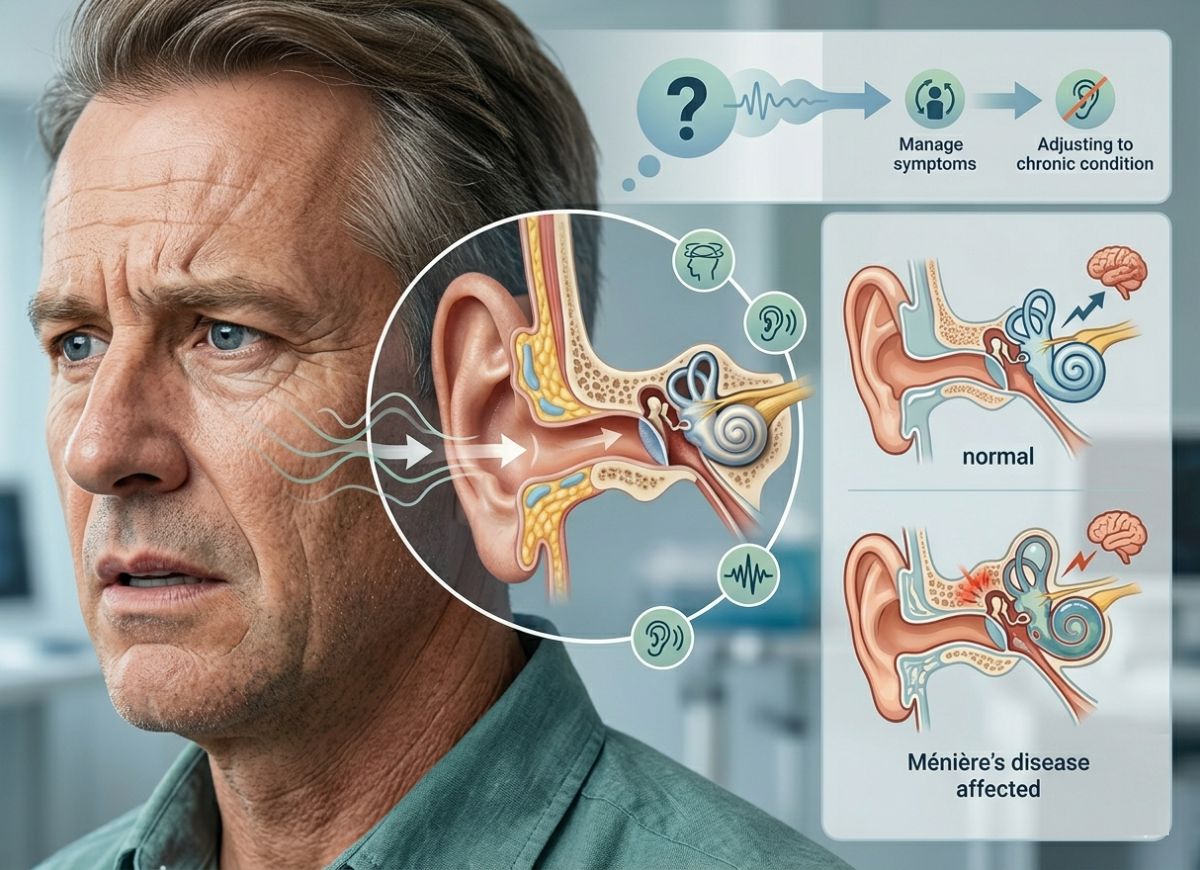
Meniere’s disease is a chronic inner ear disorder caused by an abnormal accumulation of endolymph fluid, a condition known as endolymphatic hydrops. The excess fluid pressure disrupts the function of both the vestibular and auditory structures. It is characterized by episodic attacks that include severe vertigo, fluctuating hearing loss, tinnitus (ringing in the ear), and a sensation of aural fullness or pressure.
Vestibular neuritis is caused by inflammation of the vestibular nerve, the nerve that connects the inner ear to the brain. It is typically believed to be caused by a viral infection. The inflammation disrupts the transmission of balance signals. Its hallmark is the sudden, severe, and persistent onset of vertigo, nausea, and imbalance that can last for several days, but crucially, it does not affect hearing.
Labyrinthitis is similar to vestibular neuritis but involves inflammation of the entire labyrinth, affecting both the vestibular and cochlear (hearing) parts of the inner ear. Like neuritis, it is often caused by a viral infection and results in sudden, intense vertigo. However, because the cochlea is also involved, labyrinthitis is accompanied by hearing loss and/or tinnitus in the affected ear.
Primary Symptoms of a Vestibular Problem
The primary symptoms of a vestibular problem are vertigo (a false sensation of spinning), dizziness (a broader feeling of lightheadedness or unsteadiness), imbalance or disequilibrium, spatial disorientation, vision disturbances like oscillopsia, and secondary symptoms such as nausea, vomiting, and cognitive fatigue. These symptoms arise from the brain’s struggle to process conflicting sensory information from the damaged vestibular system, the eyes, and the body’s proprioceptive system.
Firstly, it is important to distinguish between vertigo and dizziness. Vertigo is a specific type of dizziness defined as a rotational or spinning sensation, where either the individual feels they are spinning or that the environment is spinning around them. Dizziness is a more general, non-specific term that can encompass feelings of lightheadedness, faintness, wooziness, or feeling off-balance.
Imbalance and disequilibrium refers to a feeling of unsteadiness or instability while standing or walking. Individuals may feel as though they are about to fall, may veer to one side when walking, or may need to hold onto objects for support. This symptom can be constant or may only occur during movement.
Because of the tight link between the vestibular system and eye control (the VOR), vestibular disorders often cause vision problems. Nystagmus, an involuntary, rhythmic jerking or beating of the eyes, is a classic clinical sign. Patients may experience oscillopsia, a sensation that the visual world is bouncing or jiggling, especially during head movements.
Moreover, the intense sensory mismatch can overwhelm the central nervous system, leading to secondary symptoms. Nausea and vomiting are very common during acute vertigo attacks. Many people also report cognitive issues, often described as “brain fog,” including difficulty concentrating and short-term memory problems. The unpredictable nature of the symptoms can also lead to significant anxiety and a fear of movement.
How to Manage Vestibular Disorders
Most vestibular disorders can be very effectively treated or managed through a combination of specialized physical therapy, specific repositioning maneuvers, targeted medications, and, in some cases, lifestyle adjustments or surgical interventions. While a cure may not be possible for chronic conditions like Meniere’s disease, symptom management can be highly successful, allowing individuals to regain function and improve their quality of life significantly. The key is an accurate diagnosis to guide the appropriate treatment strategy.
Vestibular Rehabilitation Therapy (VRT) is a specialized form of exercise-based physical therapy designed to retrain the brain. VRT operates on the principles of compensation, adaptation, and habituation. Therapists guide patients through customized exercises that help the brain learn to use other senses (like vision and proprioception) to substitute for the deficient vestibular system, adapt to the incorrect signals, and become desensitized to movements that provoke dizziness.
For BPPV, which is a mechanical problem, the treatment is also mechanical. Maneuvers such as the Epley Maneuver are performed by a trained professional to guide the dislodged otoconia crystals out of the semicircular canal and back into the utricle, where they no longer cause problems. These maneuvers have a very high success rate, often resolving the vertigo in just one or two sessions.
Medications are typically used for symptom management, particularly during acute attacks. Vestibular suppressants can reduce the intensity of vertigo and nausea, but they are generally recommended only for short-term use as they can impede the brain’s long-term compensation process.
For chronic conditions, lifestyle modifications can be helpful. For example, patients with Meniere’s disease are often advised to follow a low-sodium diet to help manage fluid retention. Surgical options are generally considered a last resort for severe, debilitating cases that have not responded to more conservative treatments. These procedures may involve decompressing or destroying parts of the inner ear or severing the vestibular nerve to stop the transmission of faulty signals to the brain.
How is the Vestibular System Tested and Rehabilitated?
Vestibular System Diagnosis
To accurately diagnose a vestibular disorder, specialists employ a battery of tests that assess the function of the inner ear and the central nervous system pathways responsible for balance. The most common and informative of these is Videonystagmography (VNG), a test that uses small cameras inside goggles to track eye movements.
During a VNG, a patient’s eyes are monitored as they follow visual targets, change head positions, and have cool and warm air or water introduced into the ear canal (caloric testing). These stimuli are designed to induce nystagmus, an involuntary eye movement, and the patterns of this movement reveal whether the vestibular system in one or both ears is functioning correctly.
A similar test, Electronystagmography (ENG), measures the same eye movements but uses electrodes placed around the eyes instead of cameras. For more complex cases, a rotational chair test may be used. In this test, the patient sits in a motorized chair that rotates slowly back and forth while their eye movements are recorded, providing precise data on how the vestibular system responds to different types of head motion.
These diagnostic tools are crucial for pinpointing the source of a balance problem. For example, understanding how these tests work helps differentiate between inner ear and brain-related issues.
Videonystagmography (VNG) is considered the modern standard for assessing the vestibulo-ocular reflex (VOR). It has three main parts: oculomotor testing (tracking visual targets), positional testing (checking for nystagmus in different head positions), and caloric testing (evaluating each inner ear individually).
While largely replaced by VNG, Electronystagmography (ENG) is still used in certain situations. It measures the corneo-retinal potential, the difference in electrical charge between the front and back of the eye to track movements.
Rotational Chair test test is particularly valuable for diagnosing bilateral vestibular loss (damage to both inner ears) and for monitoring the progress of vestibular compensation over time, as it provides quantifiable data on the function of the VOR across a range of movement frequencies.
What is Vestibular Rehabilitation Therapy (VRT)?
Vestibular Rehabilitation Therapy (VRT) is a specialized, exercise-based form of physical therapy designed to alleviate the primary and secondary symptoms of vestibular disorders. It operates on the principle of neuroplasticity, the brain’s ability to reorganize itself and form new neural connections. When the vestibular system is damaged, the brain receives conflicting or incorrect sensory information, leading to dizziness, vertigo, and imbalance.
VRT helps the brain learn to compensate for these deficits by relying more on other sensory inputs, such as vision and proprioception, and by recalibrating its response to vestibular signals. A trained therapist first conducts a thorough assessment to identify the patient’s specific problems and then creates a customized exercise program.
The goal is not necessarily to fix the inner ear damage but to retrain the brain to coordinate all sensory information correctly, reducing symptoms and improving functional balance. This therapy is highly effective for many individuals with chronic dizziness and balance issues stemming from conditions like benign paroxysmal positional vertigo (BPPV), labyrinthitis, or vestibular neuritis.
The effectiveness of VRT lies in its specific, targeted exercises tailored to the individual’s condition. The core components of a VRT program include habituation exercises. These are designed to reduce dizziness by repeatedly exposing the patient to specific movements or visual stimuli that provoke their symptoms. Over time, the brain learns to ignore the abnormal signals from the damaged inner ear, leading to a reduction in the dizziness response.
Besides, gaze stabilization exercises focus on improving control of eye movements so that vision can remain clear during head motion. A common exercise involves keeping the eyes fixed on a stationary target while moving the head back and forth or up and down.
Balance training involves a series of progressively challenging exercises aimed at improving steadiness and reducing the risk of falls. Activities may include standing on one leg, walking on uneven surfaces, or performing tasks with eyes closed to enhance the use of somatosensory and vestibular cues.
Vestibular System vs. Proprioceptive System
While both the vestibular and proprioceptive systems are crucial for balance and spatial awareness, they provide the brain with different types of sensory information from distinct sources. The vestibular system, located in the inner ear, acts like a biological accelerometer and gyroscope. Its primary role is to detect head motion, including rotational movements (like shaking your head “no”) and linear movements (like moving forward in a car), as well as the orientation of the head with respect to gravity. It tells the brain which way is up and how the head is moving through space.
In contrast, the proprioceptive system is a network of sensory receptors located in the muscles, tendons, and joints throughout the body. These receptors, known as proprioceptors, provide information about the position, movement, and force of the body’s limbs and trunk. Proprioception is how you know where your arm is without looking at it or how you can touch your nose with your eyes closed. The brain integrates signals from both systems, along with visual input, to create a cohesive sense of body position and maintain balance.
FAQs
1. What are the big 5 vestibular disorders?
The five most commonly diagnosed vestibular conditions are:
- BPPV (Benign Paroxysmal Positional Vertigo): Dislodged calcium crystals floating into the wrong part of the inner ear.
- Vestibular Neuritis / Labyrinthitis: Inflammation of the inner ear nerve, usually triggered by a viral infection.
- Ménière’s Disease: An abnormal buildup of fluid in the inner ear causing vertigo, hearing loss, and ringing.
- Vestibular Migraine: A nervous system problem causing dizziness that may or may not include an actual headache.
- PPPD (Persistent Postural-Perceptual Dizziness): A chronic, subjective feeling of unsteadiness or rocking that lasts for months.
2. How do I fix my vestibular system?
Treatment depends on the root cause. For BPPV, a doctor or physical therapist can guide you through specific head movements (like the Epley maneuver) to shift the loose crystals back into place. For other forms of damage or chronic dizziness, targeted physical therapy exercises are highly effective.
As shown above, Vestibular Rehabilitation Therapy (VRT) uses customized physical retraining to help your brain learn to adapt to and compensate for faulty balance signals from the inner ear.
3. Which 5 organs make up the vestibular system?
Your peripheral vestibular system in each ear is comprised of five distinct sensory organs:
- Three Semicircular Canals (Anterior, Posterior, and Horizontal): Fluid-filled loops that detect rotational movements like nodding, shaking, or tilting your head.
- The Utricle: A tiny gravity-sensing sac that detects horizontal acceleration (like riding in a car).
- The Saccule: Another sensory sac that detects vertical acceleration (like riding in an elevator).
4. Will vestibular problems go away?
Many acute cases, such as vestibular neuritis or BPPV, resolve completely on their own or with minimal treatment within a few days to weeks. The brain is remarkably good at “vestibular compensation”—meaning it learns to rely more heavily on your eyes and feet to make up for a permanently weakened inner ear. However, chronic conditions like Ménière’s disease require long-term management.
5. How to calm down vestibular symptoms?
During a sudden flare-up of vertigo or dizziness, sit or lie down immediately in a quiet, dimly lit room to minimize sensory overload. Keep your head as still as possible and focus your eyes on a fixed, non-moving object. Staying hydrated helps, and your doctor may short-term prescribe rescue medications like antihistamines (meclizine) or anti-nausea medication to calm the inner ear nerve.
6. Is vertigo a stroke warning?
In the vast majority of cases, vertigo is caused by a benign inner ear issue. However, sudden vertigo can be a sign of a stroke if it originates in the brainstem or cerebellum. Seek emergency medical care immediately if your dizziness is accompanied by the “5 D’s”: Diplopia (double vision), Dysarthria (slurred speech), Dysphagia (difficulty swallowing), Dysmetria (clumsiness), or Dystaxia (difficulty walking).
7. What can be mistaken for vestibular disease?
Because dizziness is a broad symptom, vestibular disorders are frequently confused with orthostatic hypotension (a sudden drop in blood pressure when standing up), severe anxiety or panic attacks, anemia, low blood sugar, cardiac arrhythmias, or medication side effects.
8. Do vestibular disorders show on MRI?
Standard inner ear disorders like BPPV, vestibular migraine, or Ménière’s disease do not show up on an MRI because they are functional or chemical imbalances rather than structural problems. However, doctors frequently order an MRI to rule out other serious neurological causes for your dizziness, such as acoustic neuromas (benign tumors on the balance nerve), multiple sclerosis, or strokes.
Conclusion
The vestibular system is a quiet masterpiece of human biology. Operating deep within our inner ears, this complex network of fluid, tiny crystals, and microscopic nerve endings works seamlessly every second of the day to keep our world from spinning. While a glitch in this internal compass can be incredibly disorienting, causing everything from mild motion sickness to intense vertigo, it is reassuring to know that our bodies are profoundly resilient.
Between targeted medical maneuvers, specialized physical therapies like vestibular rehabilitation, and the brain’s natural ability to adapt, most balance disruptions can be managed or fully corrected. Understanding how this hidden sense operates is the first step toward regaining your footing and keeping your life beautifully in balance.
References
- NHS – Labyrinthitis and vestibular neuritis
- Vestibular Disorders Association – The Human Balance System
- Connect – Vestibular System
- UT Health – Vestibular System: Structure and Function
- NEURA – Vestibular balance
- Brain Injury Association of America – The Vestibular System: Finding Your Balance
- American Speech-Language-Hearing Association – Dizziness and Balance
- The Vestibular System