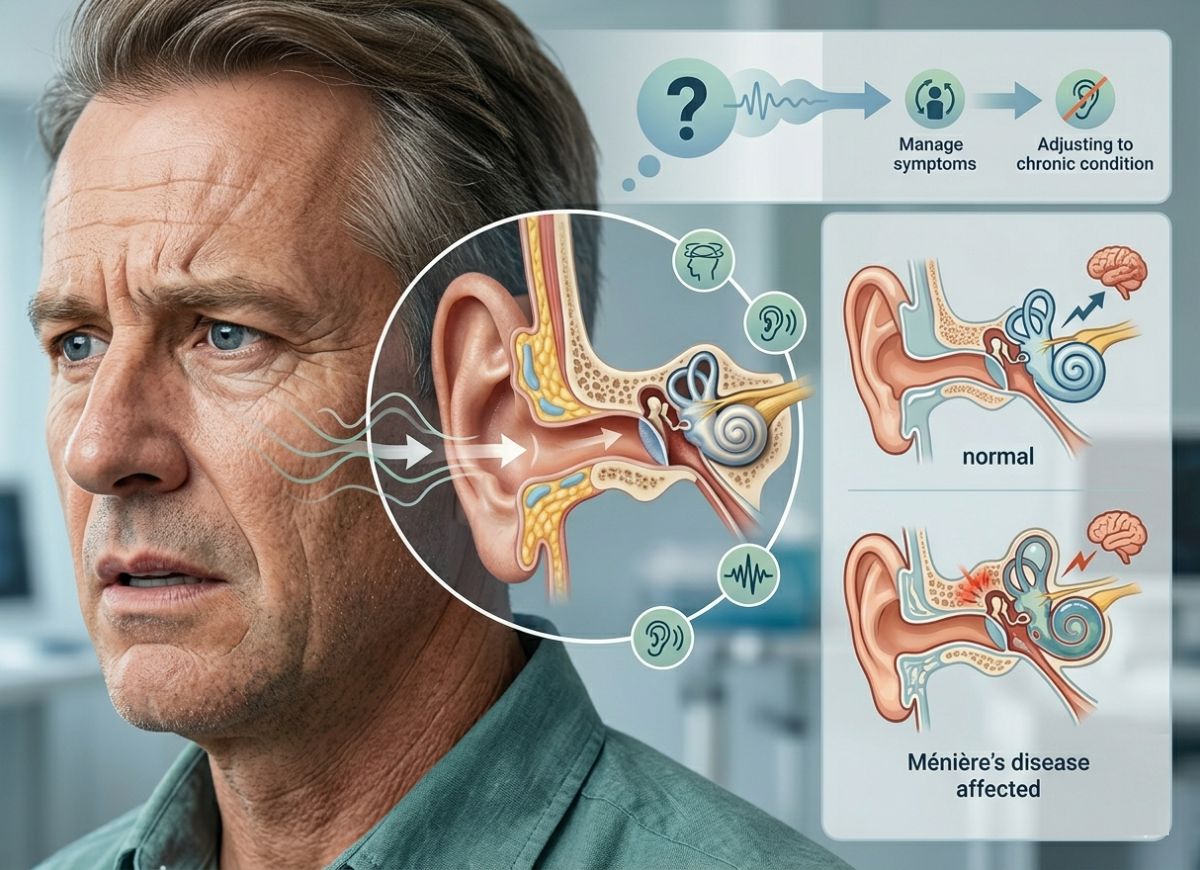
7 Symptoms of Disembark Syndrome That Can Be Easy to Miss
Disembark syndrome, more formally known as Mal de Débarquement syndrome, is a condition that makes a person feel as if they are still moving after travel or passive motion has stopped. It is often described as a rocking, swaying, bobbing, or floating sensation, even when the body is standing still.
Many people notice a brief version of this feeling after a cruise, boat ride, flight, train ride, or long car trip, but in disembark syndrome, the sensation lasts longer than expected. Because the symptoms can feel vague, they are often mistaken for vertigo, motion sickness, anxiety, or general dizziness.
Recognizing the symptoms of disembark syndrome can help people understand why they still feel unsteady after returning to solid ground. The condition may cause persistent rocking, imbalance, visual motion sensitivity, fatigue, headaches, trouble concentrating, anxiety, and symptoms that feel worse when sitting or standing still.
Interestingly, some people feel temporary relief while riding in a car or returning to passive motion. This article explains seven symptoms of disembark syndrome that can be easy to miss and why persistent dizziness should be evaluated.
Defining the Neurological Phenomenon of Phantom Motion
When a person steps off a cruise ship, airplane, or train, they expect their balance to stabilize within a few minutes. However, those who develop disembark syndrome experience a persistent, distressing illusion of movement. This neurological disorder is medically known as mal de debarquement syndrome, a phrase that translates literally from French as “sickness of disembarkation.”
[Passive Motion Exposure] ──► Central Neuroplastic Adaptation ──► Disembarkation ──► Failure to Readapt ──► Persistent Rocking
Instead of normal motion sickness, which occurs during travel and resolves once the movement stops, disembark syndrome begins after the passive motion has ended. Sufferers are left with a constant, invisible sensation of rocking, swaying, or bobbing. This feeling can last for months, years, or even decades, drastically altering their daily lives.
Central Nervous System Recalibration and Neuroplasticity
To fully understand disembark syndrome, it is important to separate it from common balance issues like vertigo. Most balance disorders are caused by a problem in the peripheral vestibular system—the fluid-filled canals of the inner ear.
                          [Balance System Typology]
                                      │
     ┌────────────────────────────────┴────────────────────────────────┐
     ▼                                                                 ▼
[Peripheral Vestibular Disorders]                     [Central Neuroplastic Disorders]
 ├── Affects inner ear fluid canals                    ├── Located inside central brain networks
 ├── Causes spinning sensations (Vertigo)              ├── Creates unceasing phantom motion
 └── Triggered by head position changes                └── Triggered by failure to reset after travel
In contrast, mal de debarquement syndrome is a disorder of the central nervous system. It is driven by neuroplasticity—the brain’s ability to adapt and rewire itself based on its environment:
-
Environmental Adaptation: During a long voyage, the brain learns to predict and adapt to the continuous, rhythmic motion of a ship or aircraft to keep the body balanced.
-
The “Stuck” Mechanism: For individuals who develop this syndrome, the brain’s adaptation mechanism gets stuck. When they return to solid ground, the central nervous system fails to reset. It continues to process balance as if the body were still in motion, creating an unceasing rocking sensation on flat land.
The Automobile Paradox and Diagnostic Distinctions
A unique feature of disembark syndrome is its core paradox: the constant swaying sensation temporarily disappears when the person returns to a state of passive motion. Many individuals find that driving or riding in a car provides immediate, brief relief from their symptoms.
[Erroneous Internal Rocking Signal] ──► Overridden by Active Automobile Motion ──► Temporary Symptom ReliefThis temporary improvement happens because the real physical movement of the vehicle matches or overrides the brain’s internal errors. This response serves as a critical diagnostic indicator for doctors.
Because the inner ears of these patients are physically healthy, standard balance tests usually return normal results. As a result, mal de debarquement syndrome is frequently misdiagnosed as chronic fatigue, an anxiety disorder, or an inner ear infection, highlighting the need for greater clinical awareness of this neurological condition.
The Common Symptoms of Disembarkment Syndrome
The most common symptoms of Disembarkment Syndrome are a persistent internal sensation of non-existent motion—such as rocking, swaying, or bobbing—coupled with significant unsteadiness and balance difficulties. These primary symptoms form the core diagnostic criteria for the condition and are the most universally reported experiences among sufferers.
While other subtle symptoms exist, it is this relentless feeling of being in motion on a stable surface that defines the disorder. Below, we will explore these hallmark symptoms in greater detail, differentiating the primary subjective sensation from the objective balance challenges that accompany it.
The Core Symptom: Persistent Phantom Motion
The primary and defining feature of disembark syndrome is a continuous, unyielding internal perception of movement, often termed phantom self-motion. This is not the spinning sensation typically associated with standard vertigo, nor is it a temporary spell of lightheadedness. Instead, it is a relentless feeling that one’s body is actively moving while remaining on a completely stable surface.
                  [Sensation Typology Dynamics]
                                │
     ┌──────────────────────────┴──────────────────────────┐
     ▼                                                     ▼
[Subjective Internal Sensation]                [Objective Environmental Friction]
 ├── Gentle, rhythmic horizontal swaying        ├── Walking on shifting, fluid waterbeds
 ├── Jarring, multidirectional vertical bobbing ├── Navigating elastic, unsteady trampolines
 └── Progressive evening escalation             └── Moving across tilting cruise ship decks
Sufferers of mal de debarquement syndrome frequently describe this invisible sensation using specific physical analogies:
-
Feeling as though they are standing on a boat navigating choppy waters.
-
Walking across a continuous stretch of trampolines or an unstable waterbed.
-
Navigating an internal landscape where the ground is constantly shifting, lurching, or tilting beneath them.
This phantom motion is entirely subjective; to an outside observer, the individual appears to be standing completely still. The intensity of this internal rocking can fluctuate dynamically, typically feeling less intense immediately upon waking and gradually worsening with physical fatigue, psychological stress, or high sensory overstimulation.
Crucially, this core symptom displays a paradoxical response to movement. While standard balance issues are aggravated by motion, individuals with disembark syndrome feel a brief wave of normalcy when they return to a state of passive motion, such as riding in an automobile. The phantom rocking returns immediately once that vehicle stops moving.
Accompanying Physical Instability and Equilibrium Disruptions
While the phantom movement is an internal sensation, the secondary symptoms of mal de debarquement syndrome manifest as visible, physical balance disruptions. The brain, constantly fighting false internal signals of movement, struggles to coordinate smooth muscle control, resulting in an array of physical balance challenges.
[Faulty Internal Motion Signals] ──► Poor Muscular Coordination ──► Wide-Gait Adaptation
Adoption of a Wide-Gait: Sufferers frequently experience a strong feeling of unsteadiness on their feet. To compensate for this perceived loss of balance and to prevent falls, individuals often unconsciously widen their stance while walking to establish a broader base of support.
Navigational Friction: Walking in a straight line, making sudden turns, or traversing visually crowded environments—such as busy supermarket aisles—can become challenging and physically exhausting. The central nervous system struggles to filter out complex visual stimuli while simultaneously managing its own false internal movement loops.
Proprioceptive Vulnerability: The underlying physical instability worsens significantly on surfaces that fail to provide firm, predictable feedback to the feet, such as plush carpeting, deep sand, or loose gravel. Additionally, losing clear visual reference points—such as walking in a dark room or simply closing one’s eyes—removes the brain’s primary tool for balance compensation, making the hidden instability instantly apparent during clinical exams.
The 7 Subtle Symptoms of Disembarkment Syndrome
The seven subtle symptoms of Disembarkment Syndrome that extend beyond the primary rocking sensation are brain fog and cognitive impairment, visual sensitivity, headaches or migraines, ear fullness and tinnitus, anxiety and depersonalization, extreme fatigue, and spatial disorientation.
These secondary symptoms are considered “subtle” not because they are mild, but because they are often overlooked or attributed to other conditions, obscuring the true nature of MdDS. They arise from the immense cognitive and physical load the brain endures while constantly trying to suppress erroneous motion signals and maintain equilibrium.
Next, we will delve into each of these seven symptoms to provide a comprehensive understanding of how MdDS impacts a person’s entire well-being.
Cognitive Exhaustion: The Mechanics of Brain Fog
The cognitive impairment and “brain fog” seen in disembark syndrome are not caused by a structural brain defect. Instead, they are the direct result of a major cellular energy drain.
Because the central nervous system fails to reset after travel, the brain must dedicate a massive amount of its processing power 24/7 to manage and suppress false motion signals. This leaves very little energy available for higher-level thinking, executive functions, and short-term memory.
This mental overload shows up in several distinct ways:
-
Short-Term Memory Lapses: Forgetting the reason for entering a room or losing track of a conversation mid-sentence.
-
Word-Finding Difficulties (Anomia): Struggling to recall common, everyday words, making speech feel slow and difficult.
-
Severe Attention Deficits: Finding tasks that require focused mental effort, such as reading a book or working on a computer screen, nearly impossible. The constant distraction of the phantom motion acts like a loud alarm blaring in the background, making clear thinking extremely difficult.
Sensory Overload: Visual Sensitivity and Vertigo
When the brain’s internal balance system is compromised by mal de debarquement syndrome, it attempts to compensate by relying heavily on visual input to determine its position in space. However, this over-reliance creates a fragile, easily overwhelmed system.
When a patient enters a busy or fast-moving environment, the brain’s visual backup system crashes, causing a sudden spike in phantom rocking, dizziness, and nausea.
[Corrupted Vestibular Input] ──► Hyper-Reliance on Vision ──► Busy Environments ──► Visual Vertigo Crash
Everyday settings can quickly become overwhelming sensory triggers. Scrolling through a smartphone or computer screen can cause instant disorientation, while walking down a grocery store aisle with rows of brightly colored packages can feel like being physically pushed or pulled.
Other common visual triggers include the subtle flicker of fluorescent lights, large moving crowds, fast-moving action sequences in movies, and intricate geometric patterns on carpets or wallpaper. To dull this intense visual noise, many sufferers find it necessary to wear sunglasses indoors or avoid busy public spaces altogether.
Physical Strains: Secondary Headaches and Vestibular Migraines
The constant muscle strain of fighting an imaginary movement takes a severe physical toll on the body, frequently leading to tension headaches. Sufferers live in a state of continuous physical tension, making constant microscopic posture adjustments to avoid falling. This persistent muscle activation causes chronic tightness in the neck, shoulders, and scalp, leading to a dull, aching pressure that feels like a tight band squeezing the head.
                  [Neurological Headache Pathways]
                                 │
     ┌───────────────────────────┴───────────────────────────┐
     ▼                                                       ▼
[Tension-Type Pain Loops]                             [Vestibular Migraine Firing]
 ├── Constant muscular bracing against sways            ├── Shares deep brainstem sensory circuits
 ├── Tight neck, scalp, and shoulder knots              ├── Lowers the brain's overall trigger threshold
 └── Relentless dull, squeezing head bands              └── Blurs the line between flares and migraines
Beyond tension headaches, disembark syndrome shares deep neurological pathways with vestibular migraines—a specialized type of migraine that causes dizziness, vertigo, and balance issues, often without a typical headache.
The ongoing sensory confusion of the syndrome can overstimulate the central nervous system, lowering the threshold for migraine attacks. For predisposed individuals, this constant imbalance can unmask a latent migraine condition, creating an overlapping cycle of symptoms where it becomes difficult to separate a syndrome flare-up from a true vestibular migraine.
Neurological Spillover: Aural Fullness and Tinnitus
Even though mal de debarquement syndrome is a central nervous system issue rather than an inner ear disease, it frequently causes auditory symptoms. The brain regions that process balance (vestibular pathways) and hearing (auditory pathways) are closely linked within the brainstem.
When the balance networks are in a state of constant, chaotic hyper-activation, this neurological irritation can spill over into nearby hearing networks, generating phantom sensations inside the ear.
[Hyper-Activated Brainstem Balance Center] ──► Spillover ──► Auditory Pathway Irritation ──► Tinnitus
This neurological spillover typically causes two distinct ear symptoms:
-
Aural Fullness: A persistent feeling of pressure, making the ears feel clogged or underwater, similar to the sensation of an airplane changing altitude. However, unlike standard pressure changes, yawning or swallowing provides no relief because the inner ear tissue is physically normal.
-
Somatosensory Tinnitus: The perception of internal sounds without any external source. This can present as a high-pitched ringing, a low-frequency hum, buzzing, or a roaring sound. These phantom noises frequently change in volume, peaking in tandem with the intensity of the internal rocking sensation.
Psychological Defense: Reactive Anxiety and Depersonalization
The psychological symptoms of disembark syndrome are not pre-existing mental health issues. Instead, they are a normal, reactive response to a disorienting and invisible neurological condition. Living with a constant fear of falling, losing physical stability, and facing the isolation of an illness that others cannot see causes high levels of daily stress and chronic hypervigilance.
[Sensory Mismatch: Body Thinks It's Rocking vs Eyes See Still Room] ──► Brain Dissociation Defense ──► Depersonalization
When the brain is trapped in a permanent sensory conflict—where the body feels like it is on a moving ship but the eyes see a completely still room—the mental mismatch can become overwhelming. To cope with this confusion, the brain may trigger dissociative defense mechanisms:
-
Depersonalization: A feeling of detachment from oneself, where the individual feels like an outside observer watching their own body and thoughts from a distance.
-
Derealization: A perception that the surrounding world is artificial, dreamlike, or distorted. These experiences are not signs of psychosis; they are an understandable byproduct of a brain struggling to construct a stable reality from conflicting sensory data.
Metabolic Depletion: Deep Physical and Mental Fatigue
The fatigue caused by disembark syndrome goes far beyond ordinary tiredness; it is a deep, bone-weary exhaustion that cannot be cured by a good night’s sleep. This systemic depletion happens because both the brain and the body are trapped in a high-energy struggle to correct a perceived imbalance.
[Continuous Brain Processing] + [Constant Low-Level Muscle Tensing] ──► Severe Metabolic Depletion
At a neural level, key balance centers like the cerebellum remain in overdrive, burning through glucose and energy stores to recalibrate a system that is stuck.
This mental drain is compounded by continuous physical exertion. To fight the internal feeling of rocking, the body’s skeletal muscles remain tense, making constant micro-adjustments to maintain balance even when the patient is sitting or lying flat in bed. This constant muscle activation leaves patients feeling as though they have run a marathon by the end of the day, forcing them to strictly ration their energy to avoid a complete physical crash.
Disrupted Mapping: Spatial Disorientation
To navigate the world safely, the brain relies on an internal map built from three streams of information: visual cues from the eyes, position signals from the muscles (proprioception), and balance data from the inner ears. Because disembark syndrome introduces a constant stream of false motion data, this internal map becomes corrupted, leading to significant spatial disorientation.
                    [The Tri-System Mapping Chaos]
                                   │
     ┌─────────────────────────────┼─────────────────────────────┐
     ▼                             ▼                             ▼
[Corrupted Balance Input]    [Overwrought Visual Input]   [Tense Proprioceptive Input]
 └── Floods system with sways  └── Strains for a stable wall └── Misjudges weight distribution
This loss of spatial awareness causes noticeable difficulties with everyday coordination:
-
Consistently bumping into doorframes, walls, or furniture because the brain misjudges the body’s width and position in space.
-
Feeling a strong need to tilt or lean the body sideways just to navigate through a standard doorway.
-
Misjudging the height of street curbs or stairs, or feeling as though a flat floor is sloped, tilted, or dropping away. This distorted perception makes walking through both familiar and unfamiliar spaces a stressful task, as the fundamental relationship between the body and the physical world becomes unpredictable.
The Causes and Triggers of Disembarkment Syndrome
The primary triggers for Disembarkment Syndrome are extended periods of passive motion, such as that experienced during sea, air, or land travel, although the exact underlying cause of the disorder remains unknown and is theorized to be a maladaptation of the brain’s vestibular and balance-processing centers.
Central Nervous System Maladaptation: A Software Disruption
The underlying cause of disembark syndrome remains an active area of neurological research, but the medical consensus points to a functional issue within the central nervous system rather than structural brain damage. It is helpful to view mal de debarquement syndrome as a “software problem” rather than a “hardware failure.”
The human brain is highly neuroplastic, meaning it constantly alters its neural pathways to match your environment. When a healthy traveler spends several days on a cruise ship, their brain stem, cerebellum, and vestibular cortex adjust to the constant, rhythmic movement of the water.
This process, called entrainment, allows the traveler to find their “sea legs.” Once they step back onto land, a healthy brain quickly resets to a stable state.
[Normal Brain]    ──► Adapts to Sea Motion ──► Steps Onto Land ──► Resets to Stillness
[MdDS Sufferer]   ──► Adapts to Sea Motion ──► Steps Onto Land ──► Fails to Reset (Stuck in Motion Loop)
In an individual with disembark syndrome, this second transition fails. The neural circuits that adapted to handle the moving environment become physically locked in that state.
Even though the eyes and feet confirm the ground is perfectly still, the brain’s internal balance center continues to fire as if the body were navigating rolling waves. This creates a persistent, distressing sensory mismatch.
Common Motion Triggers: Passive and Oscillating Environments
The most frequent triggers for mal de debarquement syndrome involve prolonged exposure to passive, oscillating motion where the body is being moved by an external vehicle.
Traditional Travel Catalysts
-
Sea Voyages: Multi-day cruises, deep-sea fishing trips, and ferry rides remain the most common triggers for the syndrome.
-
Aviation: Long-haul flights, especially those that cross multiple time zones or experience severe turbulence, can trigger the condition.
-
Land Transit: Long-distance train rides, multi-day cross-country driving trips, or extended bus tours can also cause the balance system to lock.
                      [Passive Motion Trigger Grid]
                                    │
     ┌──────────────────────────────┼──────────────────────────────┐
     ▼                              ▼                              ▼
[Maritime Navigation]      [Aviation Transit]            [Simulated Environments]
 ├── Cruise liner cabins    ├── Transoceanic flights      ├── Virtual Reality headsets
 ├── Rolling ocean swells   ├── Atmospheric turbulence    ├── Flight motion simulators
 └── Extended ferry routes  └── Extended cabin pressure   └── Continuous treadmill runs
Digital and Stationary Triggers
In our modern tech environment, researchers have identified non-travel triggers that mimic passive motion. Immersive Virtual Reality (VR) headsets, which create a strong mismatch between what your eyes see and what your body feels, can trick the brain into this state.
Additionally, prolonged use of motion simulators, sleeping on waterbeds, or spending hours on exercise equipment like treadmills or elliptical trainers can trigger the syndrome in sensitive individuals.
Spontaneous Onset: Non-Motion Triggers
While the classic version of the disorder starts right after a trip, a smaller group of patients experience a spontaneous onset. In these non-motion cases, individuals develop the exact same constant rocking, swaying, and secondary symptoms without any recent travel history.
[Image illustrating systemic stressors: Hormonal shifts, neurological strain, and physical head trauma]
Instead of a moving ship or plane, spontaneous disembark syndrome is typically triggered by a major physical or psychological stressor that destabilizes the central nervous system:
Hormonal Changes: The condition is most common in perimenopausal women, suggesting that sudden drops in estrogen may lower the brain’s ability to manage sensory signals. Spontaneous cases are also frequently linked to pregnancy, childbirth, or starting hormonal medications.
Systemic Stress and Illness: Severe, long-term psychological stress or sudden physical trauma—such as head and neck injuries—can trigger the onset. Additionally, recovering from a severe viral illness or undergoing complex surgery with general anesthesia can alter the brain’s balance networks, triggering the same continuous motion loop.
How are Disembarkment Syndrome and its Related Conditions Managed?
Management of Disembarkment Syndrome involves a multi-faceted approach focusing on an accurate diagnosis of exclusion, targeted therapies to help the brain readapt, and personalized coping strategies to improve daily function and quality of life.
Furthermore, understanding the prognosis and how MdDS differs from other balance disorders is crucial for patients navigating this challenging condition. This comprehensive strategy addresses not only the physical sensations but also the significant psychological and lifestyle impacts of the disorder.
The Diagnostic Process: A Path of Systematic Exclusion
There is no single blood test, brain scan, or genetic marker that can definitively confirm disembark syndrome. Because of this, the diagnostic process relies heavily on a careful process of elimination. A doctor’s primary goal is to systematically rule out all other potential causes of chronic dizziness and balance issues.
[Meticulous Patient History] ──► Links persistent sways to passive travel & automobile relief
                                     │
                                     ▼
[Diagnostic Testing Panel]   ──► MRI Brain Scan (Excludes structural abnormalities)
                                 ├── VNG Eye Tracking (Excludes positional BPPV)
                                 └── VEMP Pathways (Excludes Meniere's pathology)
                                     │
                                     ▼
                         [Confirmed Diagnosis of Exclusion]
This diagnostic journey begins with a detailed review of the patient’s medical history. The physician will look for a clear timeline linking the onset of symptoms to a recent trip involving passive motion, such as a cruise, a flight, or a long car ride.
The doctor will also focus on the exact nature of the sensation. A hallmark indicator of mal de debarquement syndrome is a continuous feeling of rocking, swaying, or bobbing, rather than a spinning sensation. Additionally, the patient’s report that their symptoms temporarily clear up while driving a car provides a vital diagnostic clue.
Following the medical history, a comprehensive neurological exam is conducted to test walking gait, balance coordination, and cranial nerve function. In patients with this syndrome, these baseline tests typically look completely normal. To confirm the diagnosis, the medical team will order a targeted panel of advanced tests:
-
Videonystagmography (VNG): This test monitors involuntary eye movements while the patient follows visual targets or changes head positions. It helps doctors rule out common inner ear issues like Benign Paroxysmal Positional Vertigo (BPPV).
-
Magnetic Resonance Imaging (MRI): An MRI brain scan is required to rule out structural issues, such as acoustic neuromas, brain tumors, multiple sclerosis plaques, or hidden strokes, which can all cause chronic unsteadiness.
-
Audiometry and Vestibular Evoked Myogenic Potentials (VEMP): These tests measure hearing quality and specific inner ear nerve pathways. Since disembark syndrome does not damage the inner ear, finding significant low-frequency hearing loss helps point the doctor toward other conditions, like Meniere’s disease.
Multidisciplinary Treatment and Bedside Coping Strategies
While there is no universal cure for disembark syndrome, doctors use a combination of specialized physical therapies, targeted medications, and everyday coping strategies to help calm the central nervous system.
Vestibular Rehabilitation Therapy (VRT)
Traditional physical therapy exercises can sometimes make symptoms worse, so patients work with specialists trained in advanced Vestibular Rehabilitation Therapy (VRT). This therapy uses custom balance exercises to help the brain adapt to the phantom motion signals.
Common exercises include gaze stabilization techniques to reduce visual sensitivity, and habituation movements designed to lower the brain’s response to moving environments. Some modern protocols use controlled virtual reality systems to safely re-expose the brain to moving visual patterns, helping to “reset” its internal balance map.
Pharmacological Interventions
Medications are often used off-label to help manage symptoms, with varying results:
                      [Pharmacological Tier Matrix]
                                    │
     ┌──────────────────────────────┴──────────────────────────────┐
     ▼                                                             ▼
[Central Vestibular Suppressants]                    [Neurotransmitter Modulators]
 ├── Low-dose Benzodiazepines                         ├── Selective Serotonin Reuptake Inhibitors (SSRIs)
 ├── Temporarily dampens internal rocking signals      ├── Manages overlapping reactive anxiety/depression
 └── High risk of physiological habituation            └── Regulates central sensory processing pathways
Benzodiazepines: Low-dose medications like clonazepam can temporarily calm the hyperactive balance networks in the brain stem, easing both the constant rocking sensation and reactive anxiety. However, because these medications carry a risk of dependency, they are typically used only for short periods or during severe symptom flares.
SSRIs and SNRIs: Antidepressants like sertraline or venlafaxine are often prescribed to manage the anxiety and depression that can develop with chronic illness. Additionally, these medications help regulate the brain’s chemical pathways, making the central nervous system less sensitive to conflicting sensory data.
Lifestyle and Environmental Adjustments
Making thoughtful adjustments to your daily routine can help prevent symptom flare-ups. This includes identifying and avoiding sensory triggers, such as spending long periods scrolling on a phone or visiting busy stores with fluorescent lighting.
To help the nervous system recover, patients are encouraged to practice stress-reduction techniques like mindfulness and yoga, maintain a consistent sleep schedule to prevent fatigue, and engage in gentle, predictable physical activities like walking on flat, solid surfaces.
Clinical Distinctions: MdDS vs. Vertigo vs. Meniere’s Disease
To ensure an accurate diagnosis, it is helpful to contrast mal de debarquement syndrome with other common balance disorders. The chart below highlights how these conditions differ in their core sensations, duration, and associated symptoms:
| Diagnostic Feature | Disembark Syndrome (MdDS) | Benign Paroxysmal Positional Vertigo (BPPV) | Meniere’s Disease |
| Primary Sensation | Persistent internal rocking, swaying, or bobbing; non-rotational phantom motion. | Intense, rotational spinning sensation (true vertigo). | Severe, unpredictable rotational spinning vertigo. |
| Duration & Pattern | Constant and unyielding for months or years; temporarily improves during passive car travel. | Brief episodes, typically lasting less than a minute. | Episodic attacks that come and go, lasting from 20 minutes to several hours. |
| Triggers | Started by an extended period of passive motion (sea, air, or land travel) or severe systemic stress. | Triggered instantly by specific changes in head position (e.g., rolling over in bed). | Occurs spontaneously without a clear external trigger. |
| Auditory Symptoms | No physical hearing loss; occasional secondary ear fullness or tinnitus due to nerve spillover. | No associated hearing loss or tinnitus. | A classic triad of fluctuating low-frequency hearing loss, roaring tinnitus, and a plugged feeling in the ear. |
Prognosis, Fluctuations, and the Remission Horizon
The long-term outlook for disembark syndrome varies significantly from person to person. For a subset of patients—especially those experiencing their first episode after a clear travel trigger—the condition often goes into spontaneous remission.
In these cases, the brain naturally resets itself over time, and the phantom rocking gradually fades away within six to twelve months without intensive treatment. However, even after a full recovery, these individuals may have a lower threshold for balance disruptions and can experience a recurrence after future travel.
                  [Chronic MdDS Functional Trajectory]
                                   │
     ┌─────────────────────────────┴─────────────────────────────┐
     ▼                                                           ▼
[Waxing Intensity Phases (Flares)]                   [Waning Intensity Phases (Baselines)]
 ├── Driven by systemic cortisol stress spikes        ├── Supported by dark, low-stimulus environments
 ├── Triggered by physical fatigue or sleep loss     ├── Managed through targeted rehabilitation
 └── Worsened by fast-moving visual screens          └── Provides windows of improved daily function
For others, the condition can transition into a chronic state that persists for years. In these cases, the focus of care shifts from finding an immediate cure to managing symptoms and maintaining your quality of life. The intensity of chronic symptoms typically waxes and wanes over time:
-
Waxing Phases (Flares): Symptoms can intensify due to specific triggers, such as poor sleep, high stress, hormonal shifts during a menstrual cycle, or spending time in busy environments like a crowded store.
-
Waning Phases (Baselines): Patients also experience lower-intensity “good days.” During these windows, the underlying rocking sensation drops to a manageable background level, allowing individuals to read, socialize, and go about their daily routines with greater comfort.
Early medical intervention, combined with specialized rehabilitation, plays an important role in helping patients manage these shifts and maintain long-term stability.
Conclusion
Disembark syndrome can be overlooked because it does not always cause spinning vertigo or obvious balance loss. Instead, many people feel a steady rocking, swaying, bobbing, or floating sensation that continues after travel has ended.
Symptoms may also include fatigue, brain fog, headaches, visual sensitivity, anxiety, and difficulty feeling steady in visually busy places. If symptoms last more than a few days, interfere with daily life, or appear with new hearing loss, fainting, severe headache, weakness, chest pain, or neurological changes, medical evaluation is important.
Read more: ECMO Meaning: 7 Things to Know About This Life-Support Treatment
Frequently Asked Questions
1. What is disembark syndrome?
Disembark syndrome is a condition that causes a persistent feeling of motion after travel or passive movement has stopped. It is also called Mal de Débarquement syndrome, often shortened to MdDS. People may feel like they are rocking, swaying, bobbing, or floating even while standing still. The feeling often begins after a cruise, boat ride, plane trip, train ride, or long car journey.
2. What are common symptoms of disembark syndrome?
Common symptoms include rocking, swaying, bobbing, imbalance, fatigue, headaches, brain fog, and sensitivity to visual motion. Some people feel worse when standing still, sitting still, or being in busy visual environments. Symptoms may feel less noticeable during passive movement, such as riding in a car. This pattern can make the condition confusing and easy to overlook.
3. How is disembark syndrome different from vertigo?
Disembark syndrome usually causes a rocking or swaying sensation rather than a spinning sensation. Vertigo often feels like the room is rotating, while disembark syndrome feels more like being on a boat after getting back on land. People with disembark syndrome may also feel temporarily better during car rides or other passive motion. A healthcare provider can help distinguish it from inner ear disorders, migraine, anxiety, or neurological conditions.
4. How long does disembark syndrome last?
For many people, the after-travel rocking sensation fades within hours or days. In disembark syndrome, symptoms can last longer and may continue for weeks, months, or even years in some cases. Diagnostic criteria often consider symptoms that persist beyond 48 hours after motion exposure. Persistent symptoms should be evaluated, especially when they affect work, walking, sleep, or daily activities.
5. How is disembark syndrome treated?
Treatment for disembark syndrome may include vestibular rehabilitation, symptom management, education, stress reduction, and sometimes medication depending on the patient’s symptoms. Some specialized approaches aim to retrain the brain’s balance and motion-processing systems. Standard motion sickness medicines often do not provide strong relief for persistent cases. A clinician familiar with vestibular disorders can help create a personalized treatment plan.
Sources
- Mal de Débarquement Syndrome (MdDS) (Cleveland Clinic)
- Mal de Débarquement (Vestibular Disorders Association)
- Mal de Debarquement – Symptoms, Causes, Treatment (National Organization for Rare Disorders)
- Mal de Débarquement Syndrome Diagnostic Criteria (PMC)
- Mal de Debarquement Syndrome: An Often Unrecognized and Unreported Condition (PMC)
- Examination of Current Treatments and Symptom Management Strategies Used by Patients With
- Mal de Debarquement Syndrome (PMC)
- Vestibular Disorders: Symptoms, Causes & Treatment (Cleveland Clinic)