8 Triggers That Can Make Persistent Postural-Perceptual Dizziness Worse
Persistent Postural-Perceptual Dizziness is a chronic dizziness disorder that can make a person feel unsteady, lightheaded, swaying, or off-balance even when the surroundings are still. Unlike short episodes of spinning vertigo, this condition often lingers for months and tends to fluctuate throughout the day.
Many people notice that symptoms become worse in certain situations, especially when standing upright, walking, moving through busy places, or looking at complex visual patterns. That can make ordinary routines feel exhausting and unpredictably difficult.
Understanding the triggers of Persistent Postural-Perceptual Dizziness can help people recognize why symptoms may flare in stores, crowds, traffic, screens, elevators, or visually busy environments. PPPD is often linked to changes in how the brain processes balance signals from the eyes, inner ears, body position, and movement.
It may begin after another vestibular problem, illness, injury, panic episode, or period of significant dizziness. This article explains eight triggers that can make Persistent Postural-Perceptual Dizziness worse and why identifying them may help with better symptom management.
What is Persistent Postural-Perceptual Dizziness?
Persistent Postural-Perceptual Dizziness is a chronic functional disorder of the central nervous system. Rather than a structural injury to the physical architecture of the inner ear, it is widely understood as a communication error in how the brain processes spatial information.
                       [Sensory Misalignment in PPPD]
                                      │
         ┌────────────────────────────┼────────────────────────────┐
         ▼                            ▼                            ▼
 [Visual System]             [Vestibular System]          [Somatosensory System]
(Over-relied upon;           (Inner ear sensors;          (Body & feet sensors;
 overwhelmed by motion)       physically intact)           stiffened posturing)
         │                            │                            │
         └────────────────────────────┼────────────────────────────┘
                                      ▼
                        [Maladaptive Brain Processing]
                        - High-alert filtering failure
                        - Persistent internal swaying sensation
To explain what is pppd, clinicians often use a computer analogy: it is a software problem, not a hardware problem. The hardware—the eyes, the inner ear vestibular pathways, and the nerve endings in the feet—is working fine. However, the brain’s central software fails to properly integrate this incoming data, leaving the individual with a persistent, exhausting sense of instability.
Defining PPPD Symptoms and Clinical Features
The clinical presentation of this condition relies on a specific set of chronic, perceptual changes. Unlike temporary dizzy spells, pppd symptoms are defined by their long-term presence and distinct triggers:
Persistent Non-Vertiginous Dizziness: The primary sensation is not a violent room-spinning motion. Instead, individuals experience an internal feeling of rocking, swaying, floating, or a heavy, foggy unsteadiness. To meet the formal threshold for a pppd diagnosis, these symptoms must be present on most days for at least three consecutive months.
Postural Vulnerability: The unsteadiness worsens almost immediately when the individual stands up or walks. The brain struggles to compute spatial orientation without a stable, stationary surface, often forcing patients to look for physical support or sit down to find relief.
Visual and Motion Sensitivity: A classic sign of pppd dizziness is a severe sensitivity to complex environments. Moving through crowded grocery stores, watching traffic, or scrolling on a smartphone can overwhelm the brain’s processing system, causing a major flare-up of symptoms.
How PPPD Differs From Acute Vertigo
Distinguishing between these conditions is essential because traditional treatments meant for inner ear disorders rarely provide relief for this chronic processing issue.
Primary Sensation: Acute vertigo triggers a violent illusion of spinning or external rotation where the room feels like it is moving. In contrast, PPPD causes a subjective feeling of internal swaying, rocking, floating, or general wooziness.
Temporal Pattern: Acute vertigo is distinctly episodic, presenting as clear, isolated attacks that last for seconds, hours, or days. PPPD is a chronic, daily condition where an underlying baseline of unease persists for three months or longer.
Anatomical Source: Acute vertigo usually stems from a hardware issue, such as displaced inner ear crystals or structural nerve inflammation. PPPD is a central software issue involving maladaptive brain processing.
Role of Triggers: Specific head and body position changes directly cause a temporary attack in acute vertigo. In PPPD, complex environments or visual motion do not cause the condition itself, but rather overload an already sensitized processing system.
What Causes PPPD?
When patients ask what causes pppd, the answer usually traces back to an initial medical event that disrupted the body’s balance system.
The condition typically begins with an acute episode of vertigo, a panic attack, an inner ear infection (vestibular neuritis), or a mild concussion. During that initial event, the brain naturally goes into a high-alert state, temporarily relying more on visual cues and stiffening the body to prevent a fall.
Once the initial medical issue heals, however, the brain fails to recalibrate back to its normal baseline. It stays stuck in a defensive, hyper-vigilant loop—misinterpreting standard movement and complex environments as active threats, which sustains the loop of chronic unsteadiness.
Navigating the Triggers of Persistent Postural-Perceptual Dizziness
Managing Persistent Postural-Perceptual Dizziness requires a clear understanding of the specific environmental and physiological catalysts that worsen symptoms. Because the condition is a functional central nervous system disorder, the brain struggles to accurately integrate spatial signals coming from the eyes, inner ear (vestibular system), and body position sensors (proprioception).
                          [The PPPD Trigger Network]
                                      │
         ┌────────────────────────────┴────────────────────────────┐
         ▼                                                         ▼
 [External Stressors]                                      [Internal Stressors]
 - Complex Visual Stimuli                                  - Stress & Anxiety
 - Upright Posture & Environments                          - Systemic Fatigue
 - Active or Passive Motion                                - Physical Health Changes
 - Visually Demanding Tasks                                - Repetitive Head Movements
When an individual encounters one of these triggers, the demand for precise sensory integration rises sharply. This sudden influx overloads the brain’s compromised processing capacity, leading to a significant spike in pppd dizziness, unsteadiness, and spatial disorientation.
Visually Driven Catalysts
For individuals navigating a pppd diagnosis, the visual system often becomes an unreliable anchor for stability due to a phenomenon called visual dependency.
Complex Visual Stimuli: High-contrast geometric patterns on carpets, crowded store aisles, or moving crowds present an overwhelming amount of motion-rich data. The brain attempts to lock its balance to these surroundings, but because the environment itself is busy or moving, the sensory conflict triggers deep unsteadiness.
Visually Demanding Tasks: Activities that require intense central focus—such as reading small text, watching fast-paced action movies, or working on a computer for long stretches—restrict crucial peripheral vision cues. This lack of a stable visual frame, combined with eye muscle fatigue, can make the individual feel completely untethered.
Digital Scrolling: Fast scrolling on smartphones or computer screens presents a direct visual-vestibular conflict. The eyes send a signal of rapid movement, but the body and inner ears report that the person is perfectly still. This mismatch rapidly brings on pppd symptoms like brain fog, nausea, and disorientation.
Spatial and Motion Deficits
When the brain’s automatic balance system is working suboptimally, physical orientation and motion demand a massive amount of conscious effort.
Upright Posture and Complex Environments: Simply standing or walking requires non-stop, micro-postural adjustments. To cope with a lack of stability, individuals often adopt a rigid, stiff posture to keep the head still. This defensive strategy is physically exhausting and makes the body highly sensitive to minor floor changes, sloped ramps, or uneven pathways.
Active Self-Motion: Everyday movements like quick glances to the side or bending over create a temporary lag in visual processing. The brain sets its internal motion-sensing gain too high, causing normal physical movements to feel exaggerated and threatening.
Passive Motion: Being a passenger in a car, riding on an escalator, or taking an elevator forces the inner ear to sense acceleration while the immediate visual surroundings remain completely still. This classic sensory contradiction acts as a powerful amplifier for chronic unsteadiness.
Systemic and Physiological Vulnerabilities
The severity of symptoms is tied closely to the overall state of the central nervous system. Internal stressors can lower the brain’s processing threshold, making it far more vulnerable to external triggers.
Stress and Anxiety: High-stress situations trigger the body’s fight-or-flight response, releasing adrenaline and cortisol. This heightened state of alert makes the brain hypersensitive to internal physical sensations. The brain begins to constantly check for unsteadiness, creating a compounding cycle where anxiety directly fuels dizziness, and the dizziness fuels more anxiety.
Fatigue and Sleep Deprivation: Filtering out conflicting sensory signals requires a massive amount of mental energy. When an individual is physically or mentally fatigued, the brain’s processing bandwidth drops significantly. A complex environment that might be manageable on a well-rested day can become completely overwhelming when tired.
Changes in Physical Health: Minor illnesses like colds or allergies, hormonal shifts during perimenopause or the menstrual cycle, and dehydration all divert the body’s internal resources. With fewer cognitive reserves available to stabilize the balance system, the body’s overall tolerance drops, triggering an unexpected flare-up of symptoms.
Managing Head Movement Sensitivity
It is helpful to clarify what causes pppd flare-ups during head movements compared to other conditions like Benign Paroxysmal Positional Vertigo (BPPV).
In BPPV, shifting the head in a very specific direction physically displaces inner ear crystals, triggering a brief, violent spinning sensation. In this condition, however, head movement sensitivity is much less specific. It is caused by a general influx of sudden vestibular data that overwhelms the brain’s coping mechanisms.
A quick turn of the head does not create a true spinning sensation, but rather causes a temporary “swimming” or lagging feeling in the eyes. Recognizing that these symptoms are a sign of a highly sensitive processing system—rather than a structural inner ear injury—is a key step in retraining the brain through vestibular rehabilitation.
Professional Management of Persistent Postural-Perceptual Dizziness
Managing Persistent Postural-Perceptual Dizziness requires a highly coordinated, comprehensive approach. Because it is a functional disorder of the nervous system rather than a structural injury to physical tissue, treatment focuses on retraining how the central nervous system integrates spatial signals.
A successful long-term care plan relies on a definitive clinical evaluation, specialized physical rehabilitation, and targeted pharmaceutical support to dial down the nervous system’s hyper-reactive state.
Clinical Diagnosis and Diagnostic Criteria
Because there is no definitive lab test, blood marker, or imaging scan that can identify this condition, a professional pppd diagnosis is based entirely on a thorough clinical history and the strict exclusion of other active conditions.
Duration and Persistence: The core requirement is a persistent sensation of non-vertiginous dizziness, unsteadiness, or a subjective feeling of rocking and swaying. These symptoms must be present on most days (typically 15 or more days out of a 30-day period) for at least three consecutive months. While the intensity may fluctuate throughout the day, the underlying sensation remains a constant presence.
Predictable Symptom Triggers: A defining diagnostic feature is that the baseline unsteadiness is consistently worsened by three specific circumstances: maintaining an upright posture (standing or walking), exposure to active or passive motion (such as turning your head or riding as a passenger in a car), and exposure to complex, motion-rich visual environments (like busy supermarkets, crowded streets, or scrolling through a phone).
The Inciting Event: The condition does not typically emerge out of nowhere. The patient’s history almost always reveals a distinct initial event that caused acute vertigo or disrupted balance. Common triggers include an episode of Benign Paroxysmal Positional Vertigo (BPPV), acute vestibular neuritis, a severe panic attack, a mild traumatic brain injury, or a concussion. Following the resolution of that initial event, the brain fails to recalibrate back to its baseline.
Exclusion of Other Disorders: To make a definitive diagnosis, a physician must perform physical, neurological, and vestibular examinations to rule out other active medical conditions that could better account for the chronic symptoms. This includes checking for ongoing inner ear damage, structural brain abnormalities, or systemic issues.
Distinguishing PPPD from BPPV and Meniere’s Disease
Understanding what is pppd dizziness requires separating it from more commonly known inner ear issues. While PPPD, BPPV, and Meniere’s disease all disrupt an individual’s sense of balance, they represent entirely different physiological mechanisms:
PPPD (Persistent Postural-Perceptual Dizziness): This is a chronic functional disorder, meaning it is a software issue in how the brain integrates balance information. It produces a daily, non-spinning feeling of unsteadiness, floating, or wooziness that lasts for months. It does not cause hearing loss or localized ear pressure, but it is highly sensitive to posture, general motion, and visual patterns.
BPPV (Benign Paroxysmal Positional Vertigo): This is a localized mechanical problem inside the inner ear hardware. It happens when tiny calcium carbonate crystals (otoconia) break loose and drift into the fluid-filled semicircular canals. This results in short, violent bursts of true, rotational spinning vertigo that last less than a minute. These episodes are directly triggered by specific changes in head position—such as rolling over in bed or tilting the head back—and can often be resolved immediately with physical repositioning movements like the Epley maneuver.
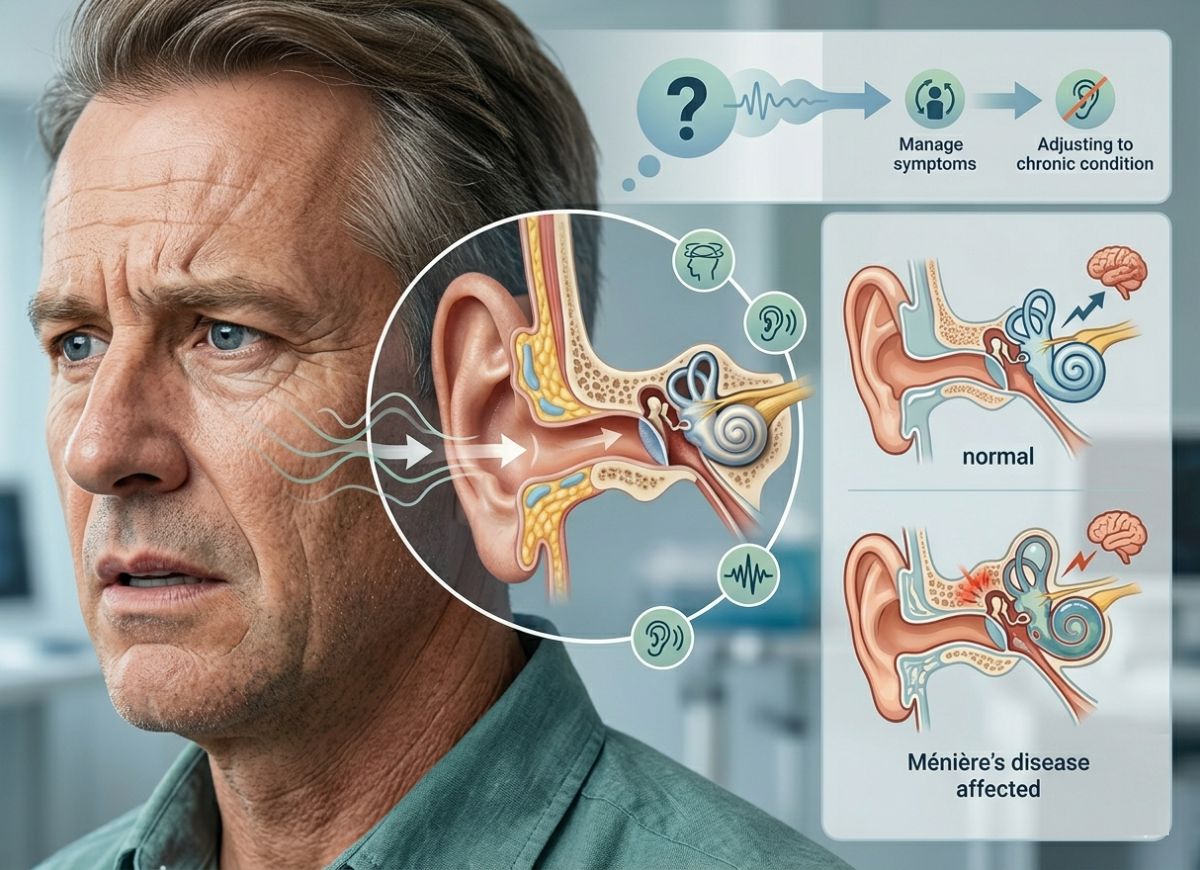
Meniere’s Disease: This is a chronic, progressive structural disease of the inner ear linked to abnormal fluid buildup (endolymphatic hydrops). It presents as spontaneous, severe attacks of spinning vertigo that last anywhere from 20 minutes to several hours. Crucially, Meniere’s is defined by a distinct triad of auditory symptoms: fluctuating low-frequency hearing loss, loud ringing in the affected ear (tinnitus), and a profound sensation of localized ear fullness.
Vestibular Rehabilitation Therapy (VRT)
The absolute cornerstone of professional management for this condition is Vestibular Rehabilitation Therapy. This is a specialized, neurorehabilitation approach designed to systematically desensitize the brain, reduce its over-reliance on visual cues, and lower its hypersensitivity to physical movement.
A customized VRT program targets the maladaptive changes in the central nervous system through three core therapeutic components:
Habituation Exercises: This involves deliberate, repetitive exposure to the specific visual or motion stimuli that trigger the patient’s dizziness. For instance, a patient might perform rhythmic head and eye movements or watch specialized videos containing high-contrast, moving patterns (optokinetic stimuli). By safely exposing the nervous system to these triggers without an actual fall occurring, the central nervous system slowly learns to filter out the erratic spatial noise. This process is known as neural habituation.
Gaze Stabilization Exercises: These drills focus on improving eye movement control to ensure vision remains clear and stable during physical motion. A foundational exercise involves fixing the eyes on a stationary target on a wall while slowly moving the head from side to side or up and down. This specific training helps recalibrate the vestibulo-ocular reflex (VOR), which is crucial for preventing the “swimming” or lagging visual sensation that people with this condition experience when moving.
Balance Training: This component uses progressively challenging physical tasks to rebuild postural control and break the habit of body stiffening. Patients start with simple tasks, like standing on a firm floor on one foot, and advance to standing on unstable surfaces (such as foam pads or balance boards). These tasks are performed while moving the head or closing the eyes, which forces the brain to stop over-relying on visual anchors and start trusting the somatosensory signals coming from the feet and joints again.
The Role of Supportive Medications
When addressing what is pppd, it is important to clarify that medications are a supportive, secondary tool rather than a standalone cure. They are used strategically to modify sensory processing and manage co-existing symptoms, creating a more stable foundation for physical rehabilitation.
Neuromodulating the Sensory Input: The most frequently prescribed medications for this condition are Selective Serotonin Reuptake Inhibitors (SSRIs) and Serotonin-Norepinephrine Reuptake Inhibitors (SNRIs). Although these are traditionally categorized as antidepressants, their primary purpose in managing chronic dizziness is neuromodulation. They alter neurotransmitter levels to essentially “turn down the volume” on the exaggerated, overwhelming sensory signals flooding the brain’s processing centers.
Lowering the Threshold for Rehab: Many individuals with this condition are stuck in a hyper-vigilant loop where intense anxiety and fear of falling make it impossible to tolerate the provocative movements required in physical therapy. By lowering the baseline sensitivity to visual clutter and motion, these medications reduce autonomic arousal (the fight-or-flight response). This calms the nervous system enough to let the patient tolerate and progress through their VRT exercises.
Clinical Implementation: Medication is not required for every individual. Its use depends entirely on the severity of the constant dizziness, the presence of comorbid anxiety or depression, and whether the patient can progress through physical therapy alone. When used, clinicians typically start at a lower dose than what is prescribed for major depressive disorders. It can take several weeks for the brain-calming effects to notice, and the medication is typically maintained for 6 to 12 months alongside active physical therapy before a very gradual taper is discussed.
Conclusion
Persistent Postural-Perceptual Dizziness can worsen when the brain is challenged by posture, motion, visual complexity, stress, fatigue, or environments that demand constant balance adjustments. Common triggers include standing upright, walking, head movement, busy visual scenes, scrolling screens, crowded places, travel, and anxiety or physical exhaustion.
These triggers do not mean the dizziness is imagined; they reflect how the balance system may become overly sensitive after a triggering event. If symptoms last for months, disrupt daily life, or come with new hearing loss, fainting, severe headache, weakness, chest pain, or neurological changes, medical evaluation is important.
Read more: Tommy John Surgery Risks, Recovery, and Return to Sports Explained
Frequently Asked Questions
1. What is Persistent Postural-Perceptual Dizziness?
Persistent Postural-Perceptual Dizziness is a chronic condition that causes ongoing dizziness, unsteadiness, or a rocking sensation. Symptoms are usually present on most days for at least three months. They often worsen when a person is upright, moving, or exposed to busy visual environments. It is considered a functional vestibular disorder, meaning the balance system may work poorly even when standard tests do not show major structural damage.
2. What can trigger Persistent Postural-Perceptual Dizziness?
Persistent Postural-Perceptual Dizziness can be triggered or worsened by standing, walking, head movement, crowded places, scrolling screens, patterned floors, supermarkets, and travel. Symptoms may also flare during stress, fatigue, poor sleep, or after another vestibular illness. Many people feel worse in visually complex places because the brain has to process many movement and balance signals at once. Keeping a symptom diary may help identify the most consistent personal triggers.
3. Why do busy places make Persistent Postural-Perceptual Dizziness worse?
Busy places can worsen Persistent Postural-Perceptual Dizziness because they create heavy visual stimulation. Crowds, bright lights, moving objects, and patterned surroundings can make the brain work harder to stay balanced. People with PPPD may rely too much on visual signals, so these environments can feel overwhelming. This can lead to swaying, lightheadedness, nausea, anxiety, or a strong need to leave the area.
4. Can screens make Persistent Postural-Perceptual Dizziness worse?
Yes, screens can make Persistent Postural-Perceptual Dizziness worse for some people. Scrolling, fast-moving videos, bright displays, and visual motion can trigger dizziness or imbalance. The symptoms may become stronger during long computer work, phone use, gaming, or watching action-heavy content. Reducing screen time, taking breaks, and adjusting brightness may help, but treatment should be guided by a healthcare professional.
5. How is Persistent Postural-Perceptual Dizziness treated?
Treatment for Persistent Postural-Perceptual Dizziness may include vestibular rehabilitation therapy, education, cognitive behavioral therapy, and sometimes medication. Vestibular therapy can help the brain gradually adapt to movement and visual triggers. Counseling may help reduce fear, avoidance, and anxiety that can make symptoms harder to manage. A clinician may tailor treatment based on the person’s history, symptom pattern, and any underlying vestibular or neurological condition.
Sources
- Persistent Postural-Perceptual Dizziness (Vestibular Disorders Association)
- Persistent Postural-Perceptual Dizziness (PPPD) (Cleveland Clinic)
- Persistent Postural-Perceptual Dizziness – StatPearls (NCBI Bookshelf)
- Diagnostic Criteria for Persistent Postural-Perceptual Dizziness (PMC)
- Persistent Postural-Perceptual Dizziness (PubMed)
- Resolving Persistent Postural-Perceptual Dizziness (Mayo Clinic)
- Persistent Postural Perceptual Dizziness (PPPD) (EyeWiki, American Academy of Ophthalmology)