8 Early Symptoms of Acoustic Neuroma That Often Go Unnoticed
Acoustic neuroma is a noncancerous tumor that develops on the vestibular nerve, which helps carry hearing and balance signals from the inner ear to the brain. It is also called vestibular schwannoma, and its symptoms often build slowly enough that people may dismiss them as aging, stress, earwax, an ear infection, or ordinary dizziness. One of the most common early clues is hearing loss in one ear, but the change may be gradual and easy to ignore at first.
The early symptoms of acoustic neuroma often go unnoticed because they can look like common inner ear problems. Ringing in one ear, balance trouble, dizziness, ear fullness, headaches, facial numbness, and subtle coordination changes may not feel alarming in the beginning. Still, symptoms that affect one side more than the other deserve careful attention, especially when they continue or worsen. This article explains eight early symptoms of acoustic neuroma that are often missed and why they should be checked by a healthcare professional.
What is an Acoustic Neuroma?
An acoustic neuroma is a benign (non-cancerous), typically slow-growing tumor that develops from the Schwann cells of the vestibulocochlear nerve (the eighth cranial nerve), which connects the inner ear to the brain.
To understand better, this tumor is more accurately called a vestibular schwannoma because it most commonly arises from the Schwann cells covering the vestibular (balance) portion of the nerve, rather than the acoustic (hearing) portion. Despite being benign, an acoustic neuroma can cause serious problems due to its location in the narrow internal auditory canal and its proximity to vital brain structures. As the tumor grows, it compresses the vestibulocochlear nerve, leading to the hallmark symptoms of unilateral hearing loss, tinnitus (ringing in the ear), and dizziness or balance problems.
If it continues to expand into the space at the base of the brain known as the cerebellopontine angle, it can press on adjacent cranial nerves, causing facial numbness or weakness, and eventually compress the brainstem and cerebellum, which can lead to life-threatening complications. The primary concern with an acoustic neuroma is not that it will spread like cancer, but that its “mass effect”—the pressure it exerts on surrounding neural tissues—will cause progressive neurological damage.
1. Defining the Tumor Architecture
When exploring what is an acoustic neuroma, it helps to look at the delicate anatomy of the inner ear and skull base. Clinically termed a vestibular schwannoma, this condition is a benign, typically slow-growing tumor that develops from the Schwann cells covering the vestibulocochlear nerve, which is the eighth cranial nerve connecting the inner ear directly to the brainstem.
To truly understand what is acoustic neuroma, one must look at its specific point of origin. The eighth cranial nerve splits into two primary functional divisions: the acoustic portion, which transmits sound signals, and the vestibular portion, which communicates balance information to the brain. This tumor almost always arises from the Schwann cells wrapped around the balance section of the nerve.
Despite its non-cancerous classification, its growth pattern within the tight confines of the internal auditory canal poses significant neurological risks. As the mass expands, it triggers a slow-motion crowding effect, compressing the nerve fibers and restricting local blood supply.
               [The Internal Auditory Canal Bottleneck]
                                  │
     ┌────────────────────────────┴────────────────────────────┐
     ▼                                                         ▼
[Early Stage Compression]                        [Late Stage Expansion]
- Localized inside narrow bony canal              - Escapes into cerebellopontine angle
- Pinches hearing & balance nerve fibers          - Presses against brainstem & cerebellum
- Causes unilateral auditory deficit             - Disrupts cerebrospinal fluid pathways
If left unmonitored or untreated, the tumor can grow out of its bony channel and venture into a larger space at the base of the brain known as the cerebellopontine angle. Once inside this critical junction, it can begin pressing against adjacent cranial nerves and the brainstem itself, transforming a localized ear issue into a complex neurological challenge.
2. Benign Pathology vs. Malignant Misconceptions
An acoustic neuroma is unequivocally not a type of brain cancer. It is classified as a benign tumor, meaning its cellular makeup is non-malignant, it grows by expanding rather than invading, and it completely lacks the biological ability to metastasize or seed distant areas of the body. This creates a fundamental distinction between a schwannoma and aggressive, malignant brain cancers like glioblastomas, which actively infiltrate healthy brain tissue and destroy surrounding structures.
The Schwann cells forming this tumor remain well-differentiated and encapsulated within a distinct fibrous sheath. They divide at an exceptionally slow pace, frequently averaging a growth rate of just one to two millimeters per year, which allows the surrounding brain anatomy a surprising amount of time to adapt to its presence.
However, labeling this mass as benign does not mean it is harmless. The clinical danger of the tumor has nothing to do with cellular malignancy and everything to do with real estate. Because it is located within a rigid, unyielding skull base crowded with vital neural pathways, the tumor exerts a destructive mass effect.
As the tumor expands, it pinches nearby structures against the bone. If it grows large enough to displace the brainstem and cerebellum, it can block the normal flow of cerebrospinal fluid, resulting in a dangerous buildup of intracranial pressure known as hydrocephalus. Therefore, while it bypasses traditional cancer treatments like systemic chemotherapy, it remains a serious condition requiring careful monitoring or advanced interventions like stereotactic radiosurgery and microsurgical removal.
3. Cellular Mechanisms and Genetic Drivers
When patients look into what causes an acoustic neuroma, they often learn that the condition stems from an abnormal overproduction of Schwann cells. In the peripheral nervous system, these specialized cells serve as the body’s biological electricians, wrapping themselves around nerve axons to create the myelin sheath—a fatty insulation layer required for rapid, uninterrupted electrical signaling.
If you look closely at what causes acoustic neuroma in roughly 95% of all diagnosed cases, the condition presents as a sporadic, unilateral event affecting only one side of the head. These sporadic cases are not linked to lifestyle choices or environmental toxins. Instead, current molecular biology points to a localized genetic mutation on chromosome 22.
[Faulty Suppressor Gene on Chromosome 22] ──► Merlin Protein Deficit ──► Unchecked Schwann Cell Division
This specific chromosome holds a critical tumor suppressor gene responsible for producing a protein called merlin, which acts as a cellular brake to keep Schwann cell multiplication in check. When this gene undergoes a spontaneous mutation or becomes inactivated in a single cell line, the brake fails, allowing the Schwann cells to multiply unchecked until they form a distinct tumor mass.
In analyzing what are the causes of acoustic neuroma from a hereditary standpoint, the remaining 5% of cases are tied to an inherited genetic disorder called Neurofibromatosis type 2 (NF2). This rare condition is characterized by a systemic, inherited defect in the tumor suppressor gene on chromosome 22, meaning every cell in the individual’s body carries a faulty blueprint.
The clinical hallmark of NF2 is the development of bilateral acoustic neuromas, where tumors grow on the vestibulocochlear nerves on both sides of the head. Individuals with NF2 face a much higher risk of developing multiple benign neural tumors, including meningiomas and spinal ependymomas, which requires a highly specialized, lifelong approach to neurological care.
4. Clinical Presentation and Symptom Evolution
The earliest acoustic neuroma symptoms usually whisper before they shout, arriving so slowly that patients often attribute them to normal aging or everyday sinus congestion. Because the tumor slowly compresses the adjacent auditory nerve fibers, the classic initial symptom is a gradual, unexplained loss of hearing confined to one ear.
Alongside this asymmetrical hearing loss, up to 80% of patients experience unilateral tinnitus, which presents as a constant ringing, buzzing, or hissing sound locked inside the affected ear. Because the tumor typically originates on the balance portion of the nerve, you might expect dramatic vertigo; however, because the growth is so slow, the brain’s balance centers usually have time to compensate, leaving the patient with a vague, subtle sense of unsteadiness or mild spatial disorientation rather than true spinning sensations.
                  [Symptomatic Progression Timeline]
                                  │
     ┌────────────────────────────┴────────────────────────────┐
     ▼                                                         ▼
[Early / Canal Phase]                            [Advanced / Angle Phase]
- Asymmetric high-frequency hearing loss          - Facial numbness (Cranial Nerve V)
- Constant, unilateral tinnitus                  - Facial twitching/weakness (Cranial Nerve VII)
- Subtle unsteadiness & gait changes              - Headache, nausea, and visual blurring
As the tumor grows beyond the internal auditory canal and enters the cerebellopontine angle, the progressive symptoms of acoustic neuroma begin to involve neighboring cranial nerves. If the mass presses against the nearby facial nerve, which controls facial expressions, it can cause subtle facial twitching, asymmetric smiling, or progressive muscle weakness.
Further expansion can compress the trigeminal nerve, leading to facial numbness, tingling, or a loss of the normal corneal blink reflex. In its most advanced stages, a large tumor mass will press directly into the brainstem and cerebellum, altering a patient’s walking gait, causing persistent headaches, and signaling a critical need for clinical intervention.
8 Overlooked Early Signs of an Acoustic Neuroma
The eight often-overlooked early signs of an acoustic neuroma include unilateral hearing loss and tinnitus, subtle balance disturbances, facial numbness or tingling, a feeling of fullness in the ear, changes in taste, poor speech discrimination, persistent headaches, and increased clumsiness.
To understand better why these seemingly minor issues can signal a more serious underlying condition, it’s crucial to examine each symptom in detail, including its cause and the reasons it is frequently misinterpreted.
1. Auditory Fluctuations and Sound Processing Deficits
When evaluating the early presentation of an acoustic neuroma, auditory anomalies are typically the first warning signs to emerge. However, because these changes occur so gradually, they are frequently misattributed to everyday issues like aging or wax buildup. The underlying issue is not a mechanical failure of the ear itself, but rather the direct compression of the auditory nerve fibers as the tumor grows within the tight space of the internal auditory canal.
Unilateral Hearing Loss and Asymmetric Tinnitus
The most common early sign is a slow decline in hearing clarity that is strictly confined to one ear. Unlike age-related hearing loss, which typically develops symmetrically in both ears, a tumor-induced deficit alters sound perception on one side of the head. This asymmetry is a key indicator for clinicians investigating the underlying symptoms of acoustic neuroma.
In its early stages, this condition often manifests as difficulty picking up high-frequency sounds, such as a child’s voice or a telephone ringing. Alongside this loss, up to eighty percent of individuals experience unilateral tinnitus—a persistent ringing, buzzing, or hissing sound locked inside the affected ear. This phantom sound occurs because the pinched nerve fibers send erratic, spontaneous electrical signals to the brain, which are then interpreted as real external noise.
                    [Asymmetric Auditory Nerve Compression]
                                       │
       ┌───────────────────────────────┴───────────────────────────────┐
       ▼                                                               ▼
[Pure Volume Loss]                                            [Signal Distortion]
- Slow drop in high-frequency ranges                          - Aberrant electrical firing
- Compensated by favoring opposite ear                        - Constant unilateral tinnitus
- Often mistaken for standard aging                           - Mimics simple fluid blockage
Advanced Phonemic Regression in Distracting Environments
Another easily overlooked auditory sign is a significant drop in speech discrimination, especially when trying to converse in noisy settings like busy restaurants or social gatherings. An individual may pass a standard pure-tone volume screening in a quiet room but find it incredibly difficult to understand spoken words when background noise is present. They often report that others seem to be mumbling or that they can hear the sound of the voice but cannot make out the specific words.
This loss of clarity happens because the tumor damages the nerve’s ability to transmit the complex, rapid timing signals required to distinguish between similar consonant sounds. This gap between near-normal volume perception and poor word comprehension is a classic sign of a nerve-related issue behind the cochlea, pointing directly toward the presence of an expanding mass.
2. Spatial Disorientation and Subtle Motor Coordination Changes
Because the balance portion of the eighth cranial nerve is usually where these tumors originate, spatial orientation is affected early on. However, because the growth is so slow, the body is often able to adapt, masking the true extent of the nerve damage.
Low-Velocity Dysequilibrium
Rather than causing the intense, room-spinning vertigo seen in inner ear infections or Meniere’s disease, this tumor typically produces a mild, persistent sense of unsteadiness. Individuals often describe a vague feeling of being on a rocking boat, a slight sway when standing still, or a momentary loss of stability when turning the head quickly.
Because the brain compensates for this slow nerve compression by relying more heavily on vision and body sensors, this unsteadiness becomes much more noticeable in low-light environments or when the eyes are closed, such as in a dark hallway or a shower. This adaptation explains why the symptom is so easily dismissed as simple fatigue or low blood pressure.
[Slow Vestibular Nerve Pinch] ──► Central Cerebellar Compensation ──► Masked Balance Deficits
Asymmetric Clumsiness and Postural Drift
As the tumor limits the nerve’s ability to send balance information, it can cause a subtle increase in one-sided clumsiness. This is not a severe loss of muscle control, but rather a slight decline in spatial awareness and automatic movement planning. An individual might find themselves consistently bumping their shoulder against a doorframe on the affected side, misjudging distances when reaching for everyday objects, or drifting toward one side while walking down a straight path.
This occurs because the brain is working with slightly inaccurate information regarding head position and movement, leading to minor errors when executing physical actions. Because these moments are easily brushed off as simple carelessness or distraction, this pattern of one-sided clumsiness is rarely recognized as an early neurological sign of a growing mass.
3. Somatosensory and Neighboring Cranial Nerve Interactions
As the tumor grows and extends beyond the internal auditory canal, it enters the cerebellopontine angle. In this crowded area at the base of the skull, the mass begins to touch and compress neighboring cranial nerves, creating symptoms that extend beyond hearing and balance.
                  [Cerebellopontine Angle Nerve Crowding]
                                     │
    ┌────────────────────────────────┼────────────────────────────────┐
    ▼                                ▼                                ▼
[Trigeminal Nerve (CN V)]  [Facial Nerve (CN VII)]          [Internal Fluid Changes]
- Intermittent cheek numbness     - Altered taste sensations        - Altered fluid dynamics
- Temporary lip tingling         - Metallic or sour taste          - Unyielding ear fullness
- Mistaken for dental issues      - Affects front of tongue         - Mimics sinus congestion
Episodic Facial Numbness and Paresthesia
When looking into what causes acoustic neuroma symptoms to spread to the face, the explanation lies in the compression of the trigeminal nerve. This large nerve sits right next to the auditory pathway and is responsible for providing sensation to the face, teeth, and jaw.
As the tumor expands, it can press against the trigeminal nerve, causing subtle, intermittent numbness or a “pins and needles” tingling sensation on one side of the face. A person might notice a brief loss of feeling across their cheek or around their lips. Because these sensations come and go in the early stages, they are easily mistaken for stress, dental issues, or an awkward sleeping position.
Unilateral Dysgeusia and Altered Taste
A less common but highly specific early sign is a change in the perception of taste, known as dysgeusia. This symptom points directly to the involvement of the facial nerve, which runs alongside the balance and hearing nerve through the same narrow bony channel. A small branch of the facial nerve, called the chorda tympani, carries taste sensations from the front two-thirds of the tongue.
When the tumor stretches or compresses these delicate nerve fibers within the canal, it can cause a persistent metallic, sour, or dull taste on one side of the mouth. Because the opposite side of the tongue continues to function normally and the sense of smell is unaffected, these taste changes are difficult to pinpoint and are rarely connected to an inner ear or neurological issue.
Unyielding Aural Fullness
Many individuals experience a persistent feeling of pressure or stuffiness in the affected ear, a symptom known as aural fullness. Patients often describe it as feeling like water is trapped in the ear canal or as if the ear is plugged with cotton.
While this sensation is common in minor conditions like sinus allergies or a blocked Eustachian tube, the key difference with a tumor-induced sensation is that it is constant and cannot be cleared by yawning, swallowing, or popping the ears. This occurs because the tumor alters the internal fluid pressure dynamics within the inner ear or sends distorted pressure signals directly to the brain.
4. Mechanical Intracranial Pressure Markers
In the early stages of a small tumor, headaches are relatively rare. However, understanding what are the causes of acoustic neuroma headaches becomes essential as the tumor increases in size and begins to push against the surrounding structures within the skull.
[Tumor Mass Expansion] ──► CSF Flow Obstruction ──► Elevated Intracranial Pressure ──► Occipital Pain
A tumor-induced headache has a distinct structural origin. As the mass expands, it can press against the cerebellum, the protective membranes covering the brain, or eventually block the normal flow of cerebrospinal fluid within the brain’s internal chambers. This blockage can lead to obstructive hydrocephalus, causing a gradual increase in pressure inside the skull.
The resulting headache is typically felt as a dull, aching pain localized to one side of the back of the head. These headaches are often worse in the morning after lying flat all night and can intensify during activities that naturally raise pressure in the head, such as coughing, sneezing, or physical straining. Because headaches are a common daily complaint, they are frequently misattributed to stress or eye strain, making it vital to evaluate them in combination with other one-sided symptoms like hearing changes or balance issues.
What Happens After Suspecting an Acoustic Neuroma?
After suspecting an acoustic neuroma based on symptoms, the next steps involve a comprehensive diagnostic process to confirm its presence, followed by a consultation with specialists to determine the most appropriate management plan for the individual’s specific case. Furthermore, this journey requires differentiating the condition from others with similar symptoms and understanding the treatment pathways available, which range from simple monitoring to active intervention.
1. The Definitive Imaging and Assessment Protocol
Confirming a diagnosis after suspecting an acoustic neuroma requires a multi-step clinical evaluation. Because early symptoms often develop very slowly, doctors begin with specialized hearing and neural conduction tests to check for retrocochlear pathway issues before moving on to definitive advanced imaging.
                  [Diagnostic Path for Acoustic Neuroma]
                                     │
     ┌───────────────────────────────┴───────────────────────────────┐
     ▼                                                               ▼
[Audiometric Evaluation]                                    [Advanced Contrast Imaging]
- Identifies sensorineural deficits                         - Contrast agent highlights highly vascular mass
- Discovers high-frequency volume gaps                      - Measures growth down to the exact millimeter
- Finds drops in word discrimination                        - Evaluates pressure on adjacent brain stem
The initial phase of this medical evaluation involves a comprehensive audiogram managed by an audiologist. This test looks for asymmetric sensorineural hearing loss, which is a classic indicator where one ear performs significantly worse than the other, particularly when processing high-frequency tones.
If this asymmetric pattern is found, a physician may order an Auditory Brainstem Response test. This diagnostic tool measures the exact speed of electrical signals as they travel from the inner ear along the auditory nerve path into the brainstem. A measurable delay on one side indicates a physical obstruction or nerve interference, providing a strong clinical reason to proceed to advanced imaging.
The gold standard for a definitive diagnosis is a Magnetic Resonance Imaging scan of the brain and internal auditory canals, performed with gadolinium contrast. While screening tests like audiograms point to a nerve issue, a contrast-enhanced MRI provides a detailed, three-dimensional look at the skull base tissue.
The injected gadolinium contrast agent enters the bloodstream and causes the highly vascular tumor to glow bright white against the surrounding dark brain structures. This high-resolution imaging allows a multidisciplinary skull base team—typically consisting of an otolaryngologist, a neurotologist, and a neurosurgeon—to map out the tumor’s size down to the millimeter, identify its precise location, and assess its physical pressure on the brainstem and facial nerve.
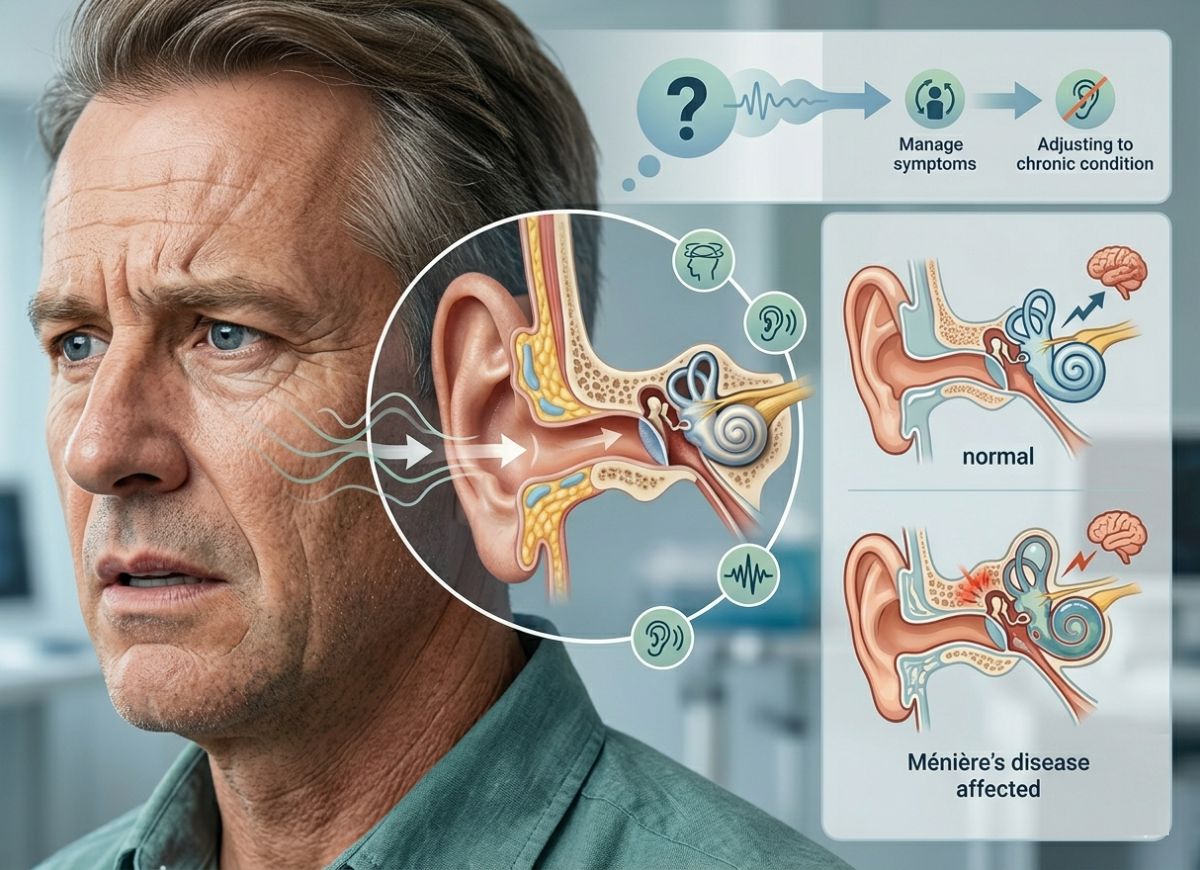
2. Clinical Distinctions: Differentiating Meniere’s Disease
Because both conditions originate within the intricate pathways of the inner ear, an acoustic neuroma is frequently confused with Meniere’s disease. Both conditions can cause progressive hearing loss, a constant ringing in the ear, and distinct balance challenges, requiring a careful differential diagnosis to ensure proper medical management.
[Acoustic Neuroma]  ──► Slow Schwann Cell Overgrowth ──► Relentless, Steady Unsteadiness
[Meniere's Disease] ──► Endolymphatic Fluid Buildup ──► Sudden, Violent Episodic Vertigo
The primary difference lies in the underlying cause and how the symptoms progress over time. A vestibular schwannoma is a physical tumor that slowly grows on the eighth cranial nerve, leading to symptoms that are generally steady, progressive, and constant over months or years.
In contrast, Meniere’s disease is a non-tumor disorder of the inner ear caused by an abnormal buildup of endolymph fluid within the labyrinth chambers. This fluid pressure causes symptoms that are characteristically episodic, shifting unpredictably between acute flare-ups and long periods of complete relief.
The nature of the balance disturbance is the most reliable way to tell these conditions apart. Individuals with a skull base tumor typically describe a mild, constant sense of unsteadiness or a feeling of being slightly off-balance, which occurs because the brain has time to adapt to the tumor’s slow growth.
Meniere’s disease, however, triggers sudden, severe, and exhausting attacks of vertigo—an intense spinning sensation that can last from twenty minutes to several hours and is frequently accompanied by severe nausea and vomiting.
Furthermore, while tumor-related hearing deficits cause a steady decline that rarely improves, the hearing loss in Meniere’s disease typically fluctuates, worsening dramatically during an attack and improving afterward, particularly in the lower sound frequencies and accompanied by a roaring tinnitus sound.
3. Genetic Transmission vs. Sporadic Occurrence
When investigating what causes an acoustic neuroma, medical data shows a clear divide between random genetic mutations and inherited systemic disorders. More than ninety-five percent of all diagnosed cases are sporadic, meaning they occur randomly in the population with no identifiable hereditary link or predictable family pattern.
These sporadic tumors are almost always unilateral, developing on only one side of the head and remaining localized to that specific nerve path throughout the patient’s life.
                  [Genetic Etiology Classification]
                                  │
     ┌────────────────────────────┴────────────────────────────┐
     ▼                                                         ▼
[Sporadic Path]                                         [Hereditary Path]
- Accounting for over 95% of cases                      - Associated with Neurofibromatosis Type 2
- Random, non-inherited gene mutation                   - Defective autosomal dominant inheritance
- Confined to a single unilateral ear                   - Drives bilateral tumor development
The remaining small percentage of cases are directly caused by a hereditary genetic disorder known as Neurofibromatosis type 2. The definitive hallmark of this inherited condition is the development of bilateral acoustic neuromas, where tumors grow on the hearing and balance nerves on both sides of the head.
This condition is an autosomal dominant genetic disorder caused by a mutation in the NF2 gene located on chromosome 22. This specific gene is responsible for producing a crucial tumor-suppressing protein known as merlin.
When a parent passes down a mutated copy of this gene, the non-functional merlin protein cannot control cell division, leading to unchecked Schwann cell growth. A child of an affected parent faces a fifty percent chance of inheriting the mutated gene, which requires lifelong monitoring for multiple central nervous system tumors, specialized genetic counseling, and proactive care to address a high risk of complete bilateral deafness.
4. Modern Management and Treatment Pathways
Once a contrast-enhanced MRI confirms the presence of an acoustic neuroma, a multidisciplinary medical team designs a personalized management plan. The choice of therapy is not a one-size-fits-all decision; it depends heavily on the measured size and growth rate of the mass, the patient’s age and overall health, and the severity of their acoustic neuroma symptoms.
                   [The Three Treatment Options]
                                 │
    ┌────────────────────────────┼────────────────────────────┐
    ▼                            ▼                            ▼
[Active Surveillance]       [Stereotactic Radiosurgery] [Microsurgical Removal]
- Routine serial MRI scans  - Targeted radiation beams   - Physical tumor excision
- Best for small masses     - Halts cellular division    - Direct skull craniotomy
- Avoids treatment risks    - Preserves facial nerves    - Potential for total cure
Active Surveillance (Watch and Wait)
For small, slow-growing tumors that cause minimal discomfort, doctors often recommend active surveillance. This approach is common for older adults or individuals with complex medical conditions where the risks of intervention outweigh the benefits.
The strategy relies on regular monitoring with serial MRI scans, typically scheduled every six to twelve months, to carefully track the tumor’s growth. If the mass remains stable and the symptoms of acoustic neuroma do not worsen, active treatment is withheld, allowing the patient to avoid the side effects of surgery or radiation.
Stereotactic Radiosurgery
Stereotactic radiosurgery is a precise, non-invasive treatment option well-suited for small to medium-sized tumors. Using advanced technologies like the Gamma Knife or CyberKnife, radiation oncologists deliver hundreds of highly focused radiation beams directly to the tumor from multiple angles.
The primary goal of this treatment is not to physically remove the mass, but to damage the DNA of the tumor cells, halting their division and causing the tumor to stabilize or shrink over time. This non-surgical approach has a high success rate for stopping tumor growth while minimizing the risk of damage to the nearby facial nerve.
Microsurgical Intervention
For larger, fast-growing tumors, or cases causing significant pressure on the brainstem, direct microsurgical removal is the necessary approach. A neurosurgeon or neurotologist performs a craniotomy to physically remove the tumor using specialized micro-instruments.
The surgeon chooses from three main approaches—translabyrinthine, retrosigmoid, or middle fossa—depending on the tumor’s size, its location, and whether there is a chance to preserve the patient’s residual hearing.
While surgery offers a definitive cure by physically removing the tumor, it carries the highest immediate risks. These include permanent hearing loss, potential facial nerve weakness or paralysis, and surgical complications like a cerebrospinal fluid leak, requiring a careful risk-benefit analysis for every patient.
Conclusion
Acoustic neuroma can be easy to overlook because its early symptoms are often mild, gradual, and similar to other ear or balance disorders. Hearing loss in one ear, tinnitus, dizziness, balance problems, ear fullness, headaches, facial numbness, and coordination issues can all be possible warning signs. The most important clue is often asymmetry, meaning symptoms are stronger on one side. If these changes persist, worsen, or interfere with daily life, a medical evaluation can help identify the cause and guide the right treatment plan.
Read more: 10 Causes of Erythema Nodosum and What They May Reveal
Frequently Asked Questions
1. What is acoustic neuroma?
Acoustic neuroma is a noncancerous tumor that grows on the vestibular nerve between the inner ear and the brain. This nerve is involved in hearing and balance, so symptoms often affect one ear or one side of the body. The condition is also known as vestibular schwannoma. Although it is usually slow-growing, it can cause serious problems if it becomes large enough to press on nearby nerves or brain structures.
2. What is usually the first symptom of acoustic neuroma?
The first symptom of acoustic neuroma is often gradual hearing loss in one ear. Some people also notice ringing in one ear, called tinnitus, before they realize their hearing has changed. Balance problems or dizziness may appear early as well, but they can be subtle. Because these symptoms are common in many ear conditions, acoustic neuroma can be missed at first.
3. Can acoustic neuroma cause dizziness or balance problems?
Yes, acoustic neuroma can cause dizziness, unsteadiness, or balance problems because it affects the vestibular nerve. This nerve helps the brain understand body position and movement. Symptoms may feel like lightheadedness, imbalance, or trouble walking steadily. Some people adjust without realizing it, which can make the problem harder to notice early.
4. Is acoustic neuroma cancer?
Acoustic neuroma is not cancer because it is usually a benign tumor. However, benign does not always mean harmless. As the tumor grows, it may affect hearing, balance, facial sensation, or nearby brain structures. Medical monitoring is important because treatment decisions depend on tumor size, growth rate, symptoms, and overall health.
5. How is acoustic neuroma diagnosed?
Acoustic neuroma is often diagnosed through hearing tests and imaging studies. A doctor may order an MRI to look for a tumor near the inner ear and brain. Balance testing may also be used when dizziness or unsteadiness is present. Early diagnosis can help doctors choose between observation, radiation therapy, or surgery when needed.
Sources
- Acoustic Neuroma (Vestibular Schwannoma) – Symptoms and Causes (Mayo Clinic)
- Acoustic Neuroma (Vestibular Schwannoma) – Diagnosis and Treatment (Mayo Clinic)
- Vestibular Schwannoma (Acoustic Neuroma) – NIDCD, NIH
- Acoustic Neuroma (Vestibular Schwannoma): Symptoms (Cleveland Clinic)
- Vestibular Schwannoma – StatPearls (NCBI Bookshelf)
- Acoustic Neuromas – Mayo Clinic Health System
- Vestibular Schwannoma: What We Know and Where We Are Heading (PMC)